
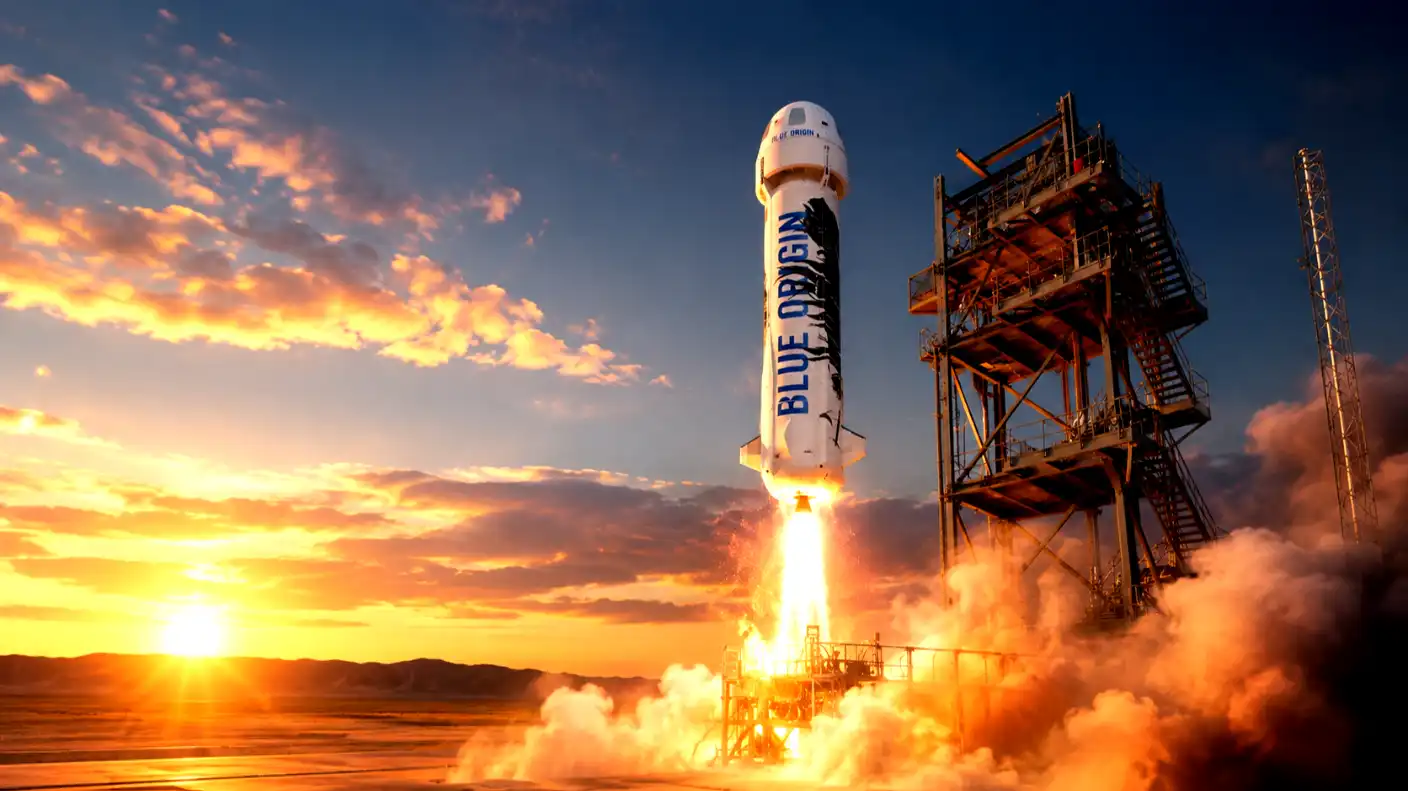
Jeff Bezos’ space exploration company, Blue Origin, has officially opened its doors to outside investors. In a historic move announced Wednesday, July 8, 2026, the company is raising $10 billion in its first-ever external funding round. This massive infusion of capital values the rocket manufacturer at approximately $130 billion, marking a significant transition for the company after 25 years of being almost entirely funded by the personal wealth of its founder.
The fundraising effort is drawing significant attention from the financial world. Tech-focused hedge fund Coatue Management is leading the investment with a $4 billion commitment. Jeff Bezos himself will contribute an additional $2 billion to the round, while the remaining $4 billion has attracted intense demand from a group of institutional investors eager to gain a stake in the growing space economy.
This capital injection comes at a pivotal time for Blue Origin as it scales its operations to compete with industry rivals. For over two decades, the company relied on proceeds from Bezos’ Amazon stock sales to fund its ambitious projects. With total historical investments reaching nearly $28 billion since its founding in 2000, and annual spending now projected at $4.8 billion, the decision to bring in outside partners helps establish a clear market valuation and reduces the pressure on Bezos to personally bankroll the company’s massive infrastructure needs.
A primary driver of investor interest is the company’s TeraWave satellite communications network. Unveiled in early 2026, this project is positioned as a direct competitor to other satellite internet constellations. Investors view the potential of this network, combined with Blue Origin’s existing heavy-lift rocket programs and government contracts, as a major engine for future revenue growth.
The move follows a period of intense activity in the commercial space sector. Just last month, SpaceX completed a historic initial public offering that raised nearly $86 billion and reached a valuation of approximately $2 trillion. This milestone has set a high bar for the industry, fueling investor appetite for other aerospace giants that can demonstrate clear paths toward commercialization and high-frequency launch capabilities.
Despite recent challenges, including a New Glenn rocket explosion during a static fire test earlier this May, the company remains focused on its long-term goals. Blue Origin is working to resume flights by the end of 2026 for both NASA and various commercial customers. By bringing in outside capital, the company gains the financial runway necessary to accelerate its launch cadence and refine its flagship rocket technology.
Industry experts believe this funding round marks a new chapter for the company. By moving away from a single-funder model, Blue Origin is better positioned to operate like a traditional, market-driven corporation. This shift is expected to provide the stability and resources required to compete in the high-stakes world of lunar missions, satellite internet, and national security launches. As the commercial space race continues to heat up, Blue Origin’s ability to secure $10 billion in new funding proves that institutional investors remain deeply committed to the future of off-planet infrastructure.