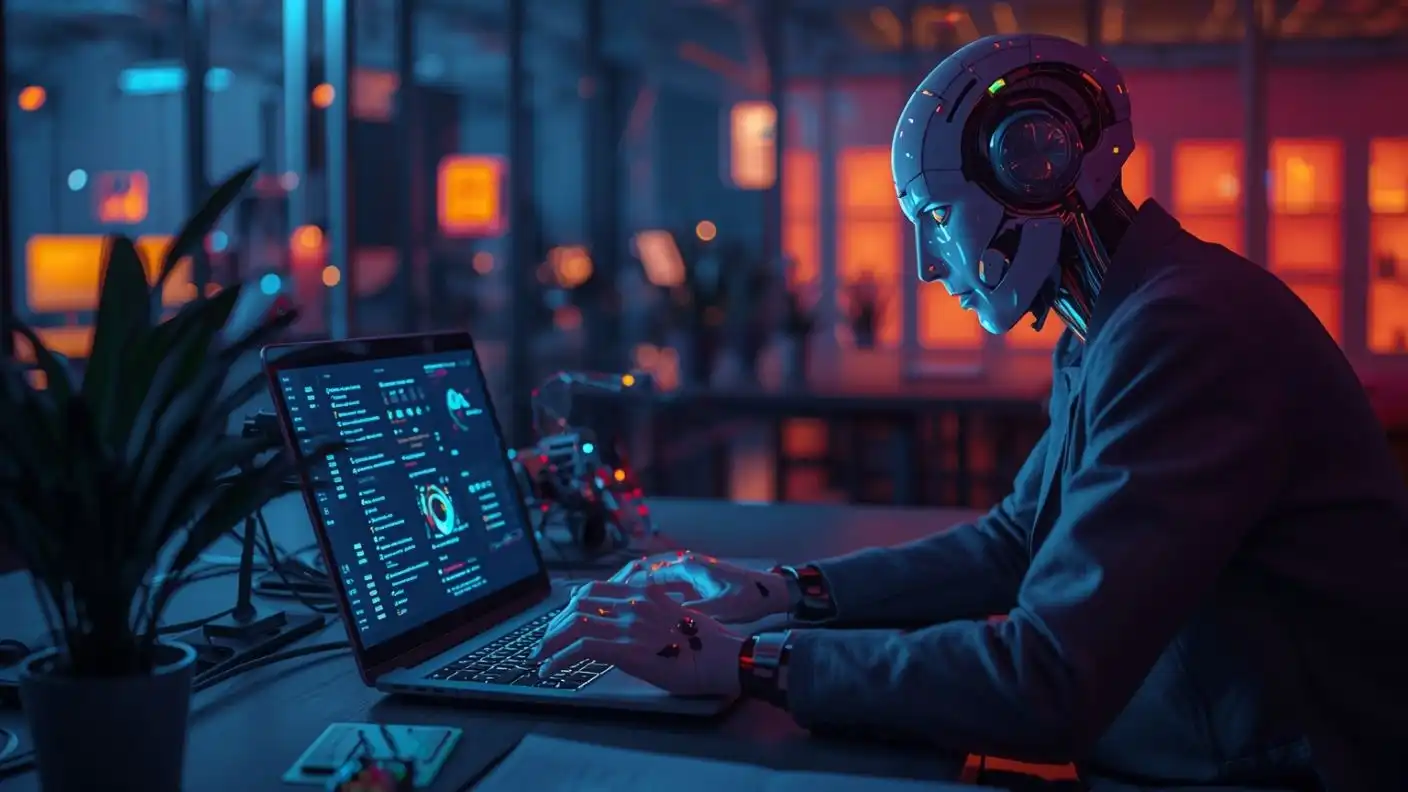
We spent the last few decades viewing software as a solitary craft. A lone developer sat in front of a flickering monitor, typed thousands of lines of cryptic code, and hoped the final product actually worked. This grueling, manual process defined the industry. But today, the game has fundamentally changed. Artificial intelligence now sits at the desk alongside the human engineer. We no longer write every single semicolon by hand. Instead, we act as directors of a digital orchestra, while the machine handles the complex, repetitive, and boring parts of the performance. This evolution does not mean we get replaced; it means our role shifts from being a bricklayer to being an architect.
The Shift From Syntax to Logic
The biggest barrier to software design always involved syntax. You had to memorize the weird, rigid rules of a programming language. If you missed a bracket or misspelled a command, the computer crashed instantly. AI tools have knocked down that wall. Now, we talk to the machine in plain language. We describe the logic of the system, and the AI handles the translation into code. This shift allows us to stop worrying about the “how” and focus entirely on the “why.” We design systems that solve human problems, rather than spending all day fighting with the language of the machine.
The Human as the Creative Director
When you remove the drudgery of writing basic code, you gain the time to be truly creative. Think of the modern developer as a movie director. The director does not carry the camera, set the lights, or paint the scenery. Instead, the director chooses the tone, the plot, and the emotional resonance of the film. Software design works the same way now. We guide the AI to build the basic components, but we retain full control over the user experience, the system architecture, and the overall ethics of the product. We decide the vision; the machine fills in the details.
Spotting Blind Spots Through Automation
Human beings suffer from massive, unavoidable blind spots. We get tired, we lose focus, and we lean on our own hidden prejudices when we make decisions. A human programmer might miss a critical security flaw because they worked a twelve-hour shift. An AI assistant, however, never gets tired. It scans the code in real-time to find vulnerabilities that a human would never notice. It checks for bugs, suggests cleaner ways to write a function, and ensures that the design follows the latest security standards. The machine acts as an eternal, tireless pair of eyes that keeps our work clean, safe, and efficient.
The New Standard of Shared Wisdom
In the old days, a developer learned only from their own mistakes. You spent years stumbling in the dark until you finally built the right intuition. Now, the AI acts as a vessel for the collective wisdom of every great programmer who ever lived. When you ask the AI for a solution, it suggests patterns based on millions of successful projects. It shares the best practices of the entire global industry with a junior developer. We no longer force every new student to reinvent the wheel. We give them the tools to build a faster car from day one.
Accelerating the Pace of Innovation
Ideas used to die in the research phase because building a prototype cost too much time and money. If a developer had a wild concept for a new app, they spent months just to get the foundation working. Today, we build prototypes in hours. This speed changes the culture of innovation. We can test ten different versions of a feature over the weekend. We can fail fast, learn what works, and move on. By cutting the time from “idea” to “functional product” by ninety percent, we allow for much more experimentation. We find the brilliant solutions that we previously never had the time to explore.
Managing the Machine’s Creative Limits
We must remember that AI follows patterns, but it does not have a soul. It looks at what people already did and suggests more of the same. It struggles to create something truly new, something that breaks all the rules and changes the world. A computer cannot dream up an entirely new way to connect people if it has never seen a similar pattern before. This reminds us why humans remain essential. The machine provides the optimization; we provide the wild, illogical, and beautiful ideas that spark true revolution. We must guard against letting our software get stuck in a loop of its own recycled history.
The Growing Need for Ethical Oversight
If we let the machine do the heavy lifting, we might accidentally let it do the thinking as well. We cannot give a machine the power to decide which designs are “good” or “bad” without strict human oversight. An AI might suggest a code structure that maximizes profit but ignores user privacy. It might recommend a design that works perfectly but excludes people with different abilities. Every single time the AI suggests a path, a human must apply a moral filter. We must decide if the suggestion helps society or if it just builds a shinier cage. The machine lacks a conscience; we do not.
Retraining the Modern Workforce
This transition leaves many talented people feeling afraid. They see the AI doing “their” work and fear for their livelihoods. We must treat this fear with total honesty. Yes, the work changes. But the need for human software designers will only grow. We must aggressively retrain our workforce to work with the AI rather than against it. We need to teach the next generation how to frame problems, how to verify machine outputs, and how to maintain the oversight of these systems. We are building a new discipline, and it requires a new kind of education that values the marriage of human logic and machine speed.
Conclusion
The future of software design does not belong to the human alone, nor does it belong to the machine alone. It belongs to the collaboration between the two. By handing over the manual labor of syntax and routine to our AI assistants, we reclaim our time to solve the hardest, most interesting human challenges. We are finally becoming the architects we were always meant to be. If we stay vigilant, maintain our ethical guardrails, and keep human creativity at the center of the process, we will build a future of software that is more powerful, more accessible, and more human than ever before.