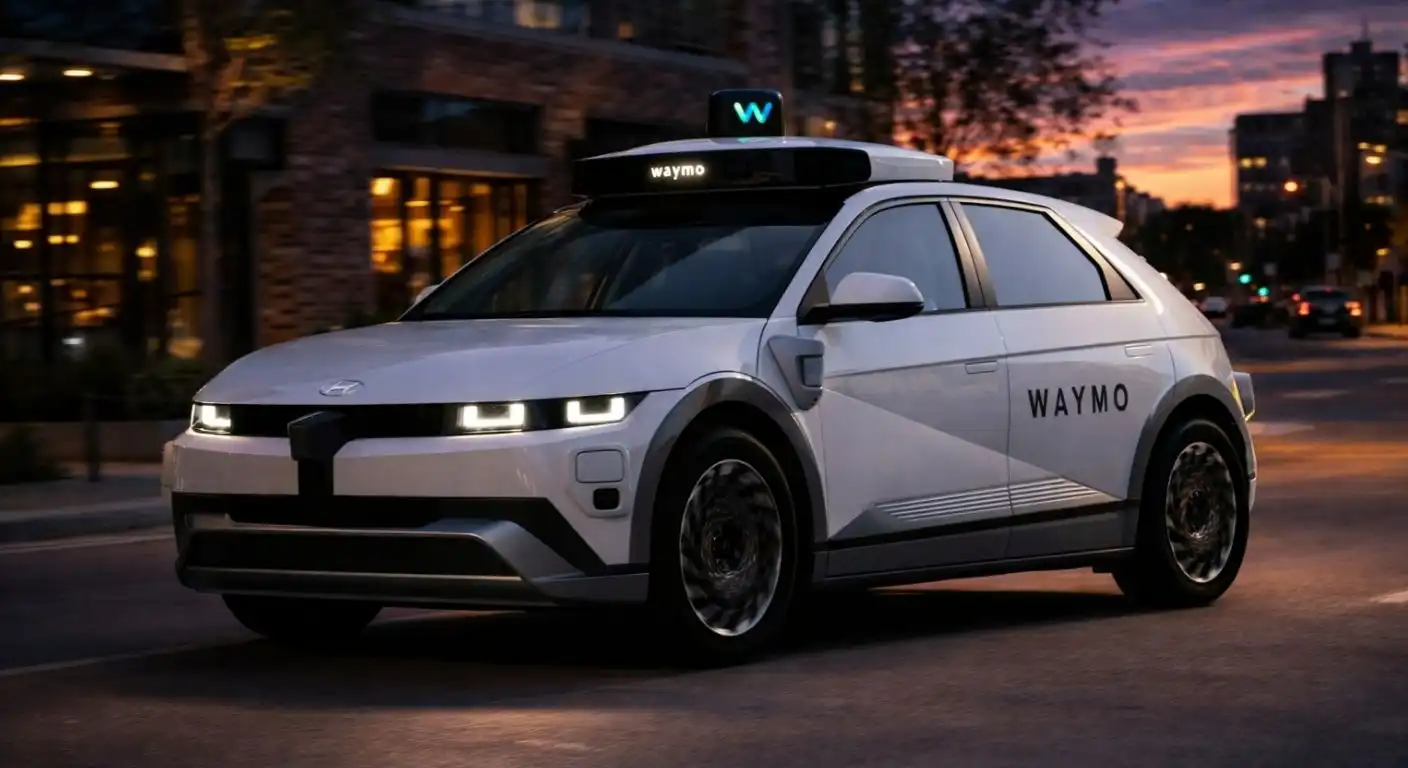
Autonomous vehicles are gaining impressive capabilities every single year, but they still struggle to master the unpredictable force of Mother Nature. Waymo, one of the leading companies in the robotaxi industry, recently hit a major snag in its expansion efforts. The company officially paused its self-driving service in Atlanta after one of its vehicles attempted to drive through a heavily flooded street. The car became stuck in the rising water, remaining trapped for roughly one hour before recovery teams could reach the scene.
This latest incident in Atlanta marks the second time in just two weeks that Waymo has been forced to halt operations due to severe weather. Last week, the company suspended its service in San Antonio after a similar event. In that earlier case, an unoccupied vehicle drove directly into deep water and was swept away by a sudden flash flood. That incident forced Waymo to issue a voluntary recall for nearly 4,000 robotaxis, as the company scrambled to deploy an over-the-air software patch to help its cars better identify dangerous, flooded roads.
Waymo claimed that a recent software update was designed to restrict autonomous vehicles from entering roads with a high risk of flooding. However, this patch clearly failed to prevent the Atlanta mishap. A Waymo spokesperson explained that the local storm intensified so quickly that the National Weather Service did not have enough time to issue a formal alert before the road became impassable. The company insisted that it is continuing to refine its software to improve performance during such intense and unpredictable weather events.
Despite the frequency of these flooding incidents, Waymo maintains that its vehicles are much safer than those operated by human drivers. A company representative stated that safety remains the top priority for both the riders and the general public. Fortunately, no injuries resulted from the recent flooding events. The company quickly recovered the vehicle from the Atlanta street, but the repeated failure of its navigation software during heavy rain has sparked renewed debate about whether these cars are truly ready for widespread city use.
Waymo has faced intense scrutiny regarding its vehicles’ behavior over the past several months. In January, the National Transportation Safety Board (NTSB) opened an investigation after reports surfaced that a robotaxi illegally passed an unloading school bus in Austin, Texas. On that exact same day, another Waymo vehicle struck a child who had darted into the street. While the company stated that its sensors detected the pedestrian immediately and braked hard—reducing the speed from 17 mph to under 6 mph—the child still sustained minor injuries. The National Highway Traffic Safety Administration (NHTSA) is currently investigating that collision.
These incidents highlight the difficult gap between driving in clear weather and navigating complex, dangerous urban environments. Developing autonomous cars is an incredibly expensive endeavor, with major tech firms pouring well over $1 billion into research and development to solve these exact problems. Even with billions of dollars on the table, achieving a 99% safety rate is not enough; the public expects these machines to be near-perfect before they are allowed to roam city streets without a human monitor.
Industry analysts suggest that the “long tail” of driving scenarios—the rare, dangerous events like flash floods or sudden pedestrian crossings—remains the biggest hurdle for self-driving technology. Companies like Waymo often succeed in 98.5% of typical driving situations, but the remaining small percentage of unpredictable cases continues to cause crashes and service suspensions. Each incident like the ones in Atlanta and San Antonio forces the company to take a step back, update its software, and prove to regulators that the machines can handle the next storm safely.
Waymo faces a tough road ahead as it attempts to scale its operations while keeping regulators and the public satisfied. Every time a robotaxi gets stuck in a flood or clips a mirror, the company loses a little bit of the trust it has worked so hard to build. For now, the vehicles remain parked in Atlanta and San Antonio until the engineers can find a way to make the navigation software smarter than the rapidly changing weather patterns of the southern United States.