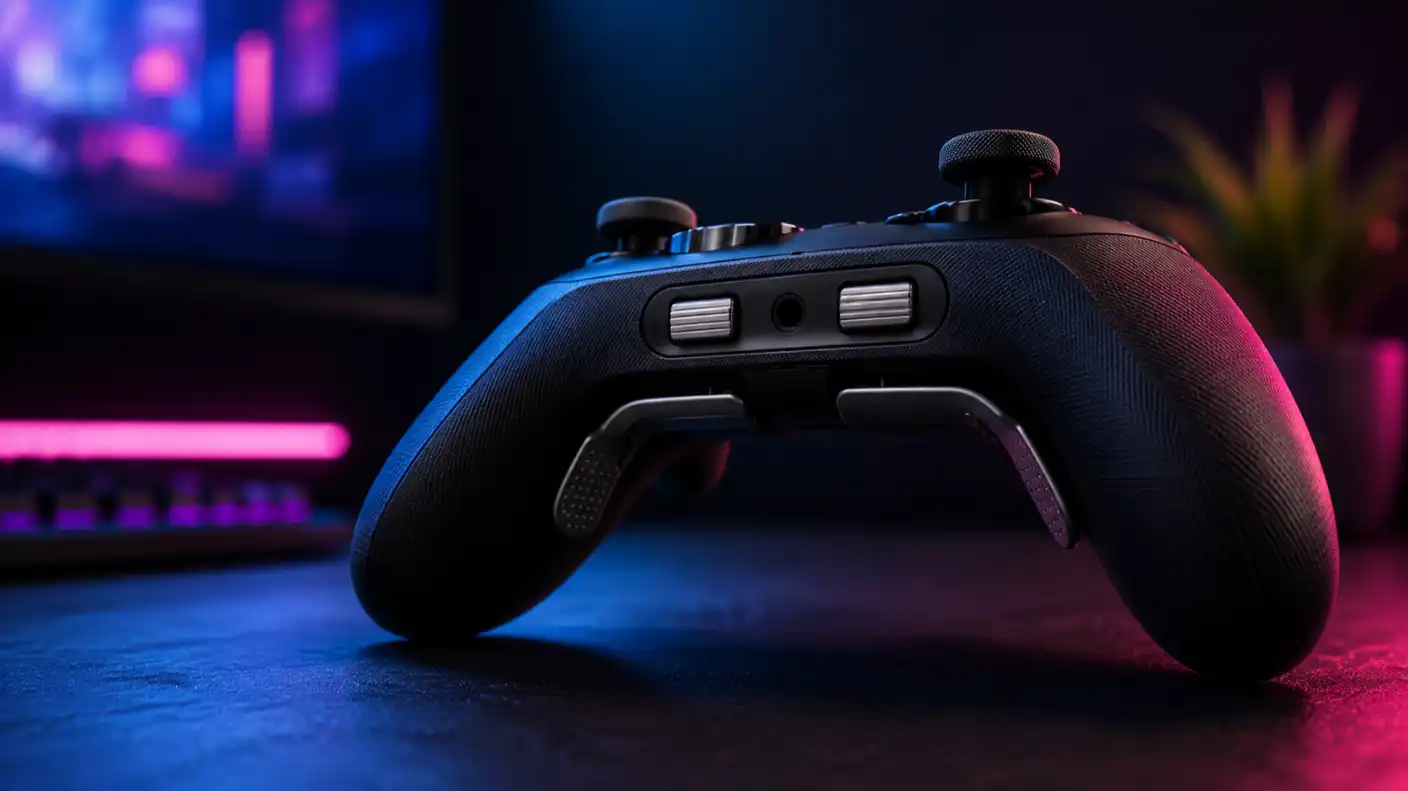
The Xbox controller is losing one of its most recognizable features. For years, the small port on the bottom of the gamepad served as a hub for keyboards, chat adapters, and other accessories. Now, new evidence suggests that Microsoft is permanently closing this port off. Recent reports from players indicate that the new Forza Horizon 6 special edition controller lacks a connection point entirely, leaving a smooth, plugged-up surface where the port used to reside.
This change is not an isolated incident. Leaked images of the upcoming Xbox Elite Controller Series 3—which recently appeared online—also show no sign of the expansion port. Furthermore, Microsoft updated its official online store page in April to include a subtle disclaimer: “Not all versions of this controller include an expansion port.” This specific line of text did not exist on the website as recently as March 31, 2026. These three pieces of evidence suggest a clear, company-wide transition away from the legacy connection.
For gamers who grew up during the Xbox 360 and Xbox One eras, this port was legendary. It was the home of the “Chatpad,” a snap-on keyboard that made typing messages and navigating menus significantly faster. Many players loved the Chatpad because it added a satisfying weight to the controller and provided quick-access buttons for volume and game settings. During the 2010s, this accessory gave Microsoft a distinct advantage in the controller market, helping them establish a reputation for player-friendly, highly customizable hardware.
Microsoft slowly lost interest in the expansion port as the years went by. By 2019, the company quietly stopped producing the Chatpad without ever making a formal announcement. When the Xbox Series X and Series S consoles launched in November 2020, the new controllers still featured the physical port on the bottom. However, Microsoft stopped marketing it as a selling point. In the years since, the company has released no new keyboards, headset adapters, or charging accessories that utilize the proprietary connection.
The removal of the port is a surprising choice given Microsoft’s history of experimenting with unique gaming hardware. This is the same company that spent over $1 billion developing and marketing the Kinect motion-sensing system—twice. Even today, the Xbox brand remains a leader in accessibility through its innovative Adaptive Controller, which allows players with limited mobility to customize their gaming setup using a wide array of external switches and buttons. Removing the port feels like a step backward for a company that usually prides itself on inclusive and weird, cutting-edge hardware.
One could argue that the port has simply become obsolete. Modern controllers now feature a standard 3.5mm headphone jack, which makes the old headset adapters unnecessary. Additionally, the official Xbox mobile app allows players to use their smartphone keyboards to type directly into the console, effectively replacing the physical Chatpad. From a design perspective, sealing the port creates a cleaner look and likely reduces the cost of manufacturing by a few dollars per unit—savings that add up when you are selling millions of controllers.
However, many fans still feel the loss. Companies like Nintendo have shown that there is still plenty of money to be made by selling “whimsical” or specialized accessories to dedicated fans. By sealing the port, Microsoft is effectively ending the possibility of third-party innovators creating new, creative ways to expand the functionality of the gamepad. They are choosing a sleek, simplified design over the chaotic potential for user-driven innovation that made the Xbox brand so fun during the previous generation.
Microsoft has yet to provide an official statement on why they are removing the expansion port. For now, the move appears to be a quiet transition. If you are a fan of custom accessories, you may want to hold onto your older controllers for as long as possible. The era of the “snug-fitting” Chatpad and the modular accessory ecosystem is likely drawing to a close. While we gain a slightly lighter and more streamlined controller, we lose a little bit of the personality that helped Xbox define the gaming experience for an entire decade.