In a move that has sent shockwaves through the technology industry, SpaceX has officially announced the acquisition of Anysphere, the company behind the popular AI-powered coding editor Cursor. This all-stock deal, valued at a massive $60 billion, marks one of the most significant consolidations in the history of artificial intelligence. The acquisition was finalized just days after Cursor made its debut on the Nasdaq, signaling a new, aggressive chapter for the aerospace giant as it pivots deeper into the software-defined future.
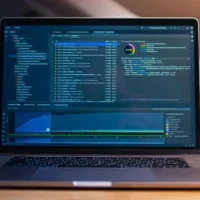
For those unfamiliar with the landscape, Cursor is far more than a simple text editor. It is an AI-native coding agent built on the architecture of Visual Studio Code, designed to act as a partner for software engineers. Unlike standard plugins that offer basic autocomplete functions, Cursor possesses deep “codebase awareness,” meaning it can reason across entire projects, suggest complex architectural changes, and automate multi-step programming tasks through natural language prompts. By bringing this tool in-house, SpaceX aims to supercharge its internal development capabilities.
The strategic logic behind the $60 billion price tag centers on the integration of Cursor with xAI, the artificial intelligence division associated with Elon Musk’s ventures. By combining Cursor’s widespread distribution among expert software engineers with the immense computational power of xAI’s “Colossus” supercomputer—a cluster touted as the largest in the world—SpaceX intends to build what it describes as the “world’s most useful models.” The synergy here is clear: SpaceX needs world-class software to govern its rockets and Starlink satellites, and Cursor provides the perfect interface to build that software at unprecedented speeds.
Critics and market analysts are debating whether the $60 billion valuation is justified, yet many point to the “compute-for-equity” handshake as a masterstroke of vertical integration. Earlier this year, SpaceX secured the option to purchase the firm or alternatively pay a $10 billion fee for joint engineering work. Choosing the full acquisition suggests that leadership sees the software-layer of their business as just as critical as the hardware. This deal also provides SpaceX with a direct line to millions of developers who rely on Cursor, giving them a massive advantage in the race to set industry standards for AI-assisted programming.
The ripple effects of this acquisition are already being felt across Silicon Valley. With Cursor now a wholly owned subsidiary of SpaceX, the playing field for AI tooling has fundamentally shifted. Companies that previously relied on Cursor to maintain their internal codebases are now watching closely to see how the platform evolves under new ownership. For SpaceX, the focus remains on accelerating the software lifecycle. As the company continues to launch thousands of Starlink satellites and prepare for deep space missions, the ability to iterate on code in real-time using agentic AI will likely become a major competitive moat.
This consolidation signals a broader trend where industry giants are no longer content to just buy software; they are acquiring the very tools that define how the next generation of software is built. As the deal moves toward its expected close in the third quarter of 2026, the tech world will be watching to see if this marriage of aerospace engineering and AI-native coding delivers the breakthroughs promised. If successful, SpaceX will have effectively turned its entire engineering workforce into a powerhouse capable of building complex systems faster than anyone else on the planet.