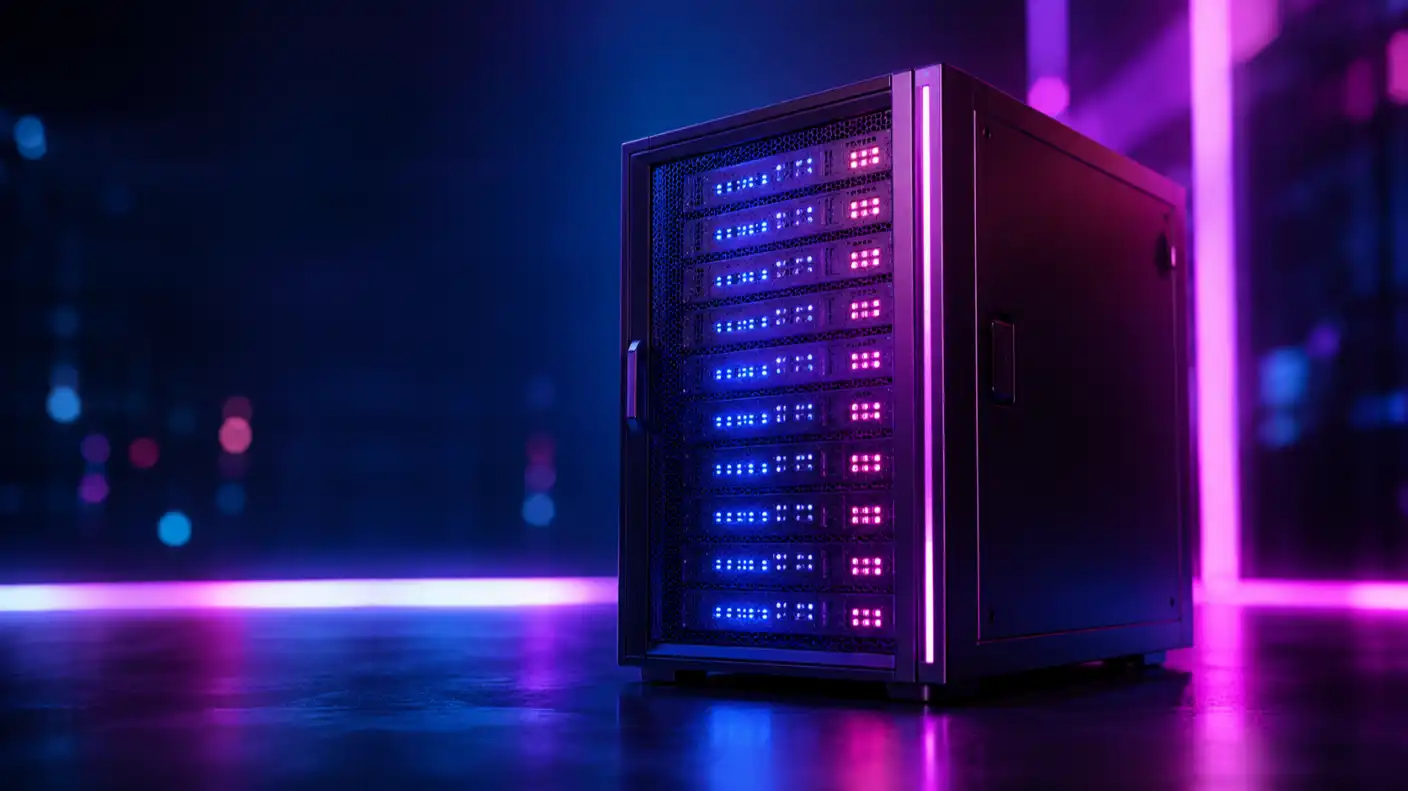
China has officially reclaimed the title of the world’s fastest supercomputer, marking its first return to the top spot since 2017. The new system, named LineShine, debuted at the number one position on the latest TOP500 list, which was unveiled at the ISC High Performance conference in Hamburg. By achieving a performance of 2.198 exaflops, this massive machine has surpassed the previous leader, the United States’ El Capitan, and set a new standard for global high-performance computing.
The LineShine system is housed at the National Supercomputing Centre in Shenzhen and was developed by the Shenzhen Cloud Computing Center. What makes this achievement particularly notable is the design of the machine. While most top-tier supercomputers in the United States and Europe rely heavily on power-hungry GPUs to boost their performance, LineShine achieves its record-breaking speeds using only CPUs. This marks the first time a supercomputer has exceeded 2 exaflops of sustained double-precision performance using a CPU-only architecture.
Under the hood, the system is built around custom 304-core LX2 processors. In total, the supercomputer packs 13.79 million cores running at 1.55GHz, all linked by a proprietary interconnect known as LingQi. By moving away from external accelerators, the Chinese developers successfully bypassed many of the technology embargoes that have limited their access to advanced foreign-made chips, proving their ability to innovate internally.
Energy efficiency remains a critical aspect of modern computing, and LineShine draws approximately 42.2 megawatts of power to operate. This results in an efficiency rating of 52.07 gigaflops per watt. While this figure is slightly lower than the 60.94 gigaflops per watt achieved by the now second-place El Capitan, LineShine’s raw processing power gives it a significant edge. The system is exceptionally well-suited for traditional scientific workloads, such as complex simulations and climate modeling, which have long been the core focus of supercomputing centers worldwide.
The release of the latest TOP500 list highlights a shift toward architectural diversity in the race for computing supremacy. There are now five exascale systems operating globally that have crossed the one-exaflop threshold. Alongside LineShine, the list features the U.S.-based El Capitan, Frontier, and Aurora, as well as the JUPITER Booster located in Germany. This crowded upper tier confirms that there is no single dominant path to leadership, as vendors continue to explore various CPU, GPU, and custom-accelerator approaches.
Although LineShine currently holds the top spot for traditional HPL benchmark scores, experts note that its performance in mixed-precision tasks—which are often used for AI training—is different. In those specific tests, the system placed fourth, behind several U.S. competitors. This distinction suggests that while China’s new machine is an incredible feat of engineering for scientific research, the global competition between countries continues to evolve as companies and labs prioritize different types of computing power to stay ahead in both science and artificial intelligence.