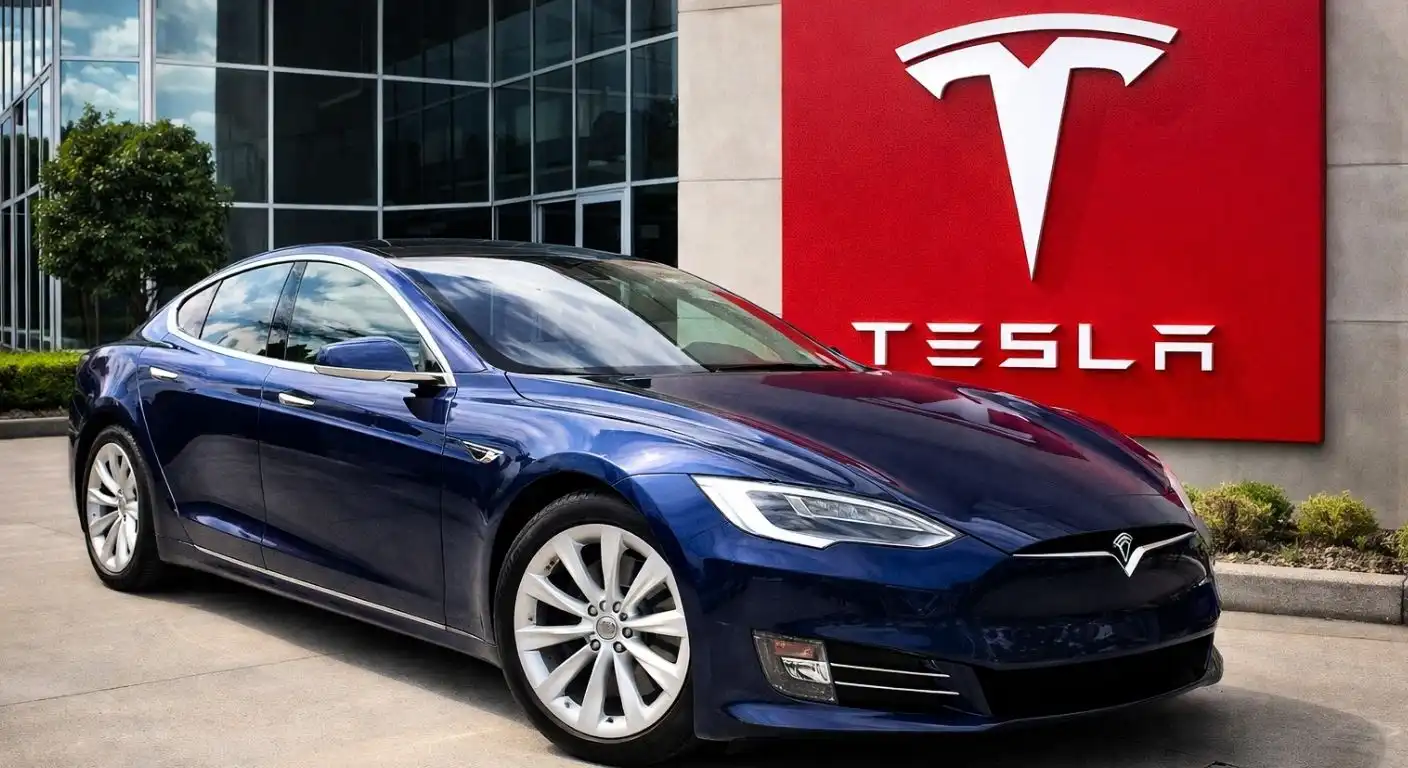
Two U.S. senators are pushing for a federal investigation into how Tesla calculates its “Full Self-Driving” safety statistics. Senators Edward Markey of Massachusetts and Richard Blumenthal of Connecticut sent a formal letter to the National Highway Traffic Safety Administration (NHTSA) on June 16, 2026, describing Tesla’s current safety data as both “weak and misleading.” The lawmakers argue that these inflated figures represent an urgent safety problem that requires immediate federal oversight.
The push for an investigation follows investigative findings that suggest Tesla’s claims—often touted by CEO Elon Musk and other executives—do not stand up to independent scrutiny. For over a year, Tesla has publicly stated that its Full Self-Driving (FSD) system is up to 10 times safer than a human driver. However, the senators point to a series of flawed methodologies that appear to systematically inflate the apparent safety advantage of the software.
One of the primary concerns highlighted in the letter involves how Tesla compares its own crash data to national averages. Researchers discovered that Tesla frequently compares crash rates where airbags deployed in its vehicles against a much broader set of U.S. crash data. This federal dataset includes all crashes requiring a tow truck, which often includes minor accidents that do not trigger an airbag. By comparing these unlike events, Tesla’s internal metrics create a lopsided view that favors its technology.
The senators are also questioning the specific conditions Tesla uses to define a “crash.” While the NHTSA typically utilizes a 30-second window to account for events surrounding a collision, Tesla’s internal methodology reportedly relies on a much narrower, 5-second window. This discrepancy means many incidents may simply disappear from Tesla’s reporting, leading to a significant distortion of real-world performance.
In their letter, the senators have set a deadline of July 7 for the NHTSA to provide answers to a series of critical questions. They want to know if the agency has ever independently verified Tesla’s claims or requested the raw, underlying data used to produce those statistics. Furthermore, the lawmakers are calling for the NHTSA to establish more rigorous reporting standards for all companies developing autonomous and advanced driver-assistance systems. They argue that under current regulations, the government lacks the tools to verify if public safety claims hold any basis in reality.
This is not the first time Tesla has faced scrutiny over its marketing. While the company maintains that its FSD system helps prevent accidents and saves lives, the disconnect between these corporate marketing claims and the actual technical performance has drawn heat from both safety researchers and now federal lawmakers. As the company continues to advance its AI-driven driving software, the pressure for transparency has reached an all-time high.
For now, the automotive industry awaits the NHTSA’s response to the July 7 deadline. The outcome of this inquiry could lead to stricter federal mandates, forcing companies like Tesla to move away from self-published statistics and toward standardized, audited reporting. Until then, the debate over whether FSD truly makes the road safer—or simply makes for effective marketing—remains a central point of contention for regulators and the public alike.