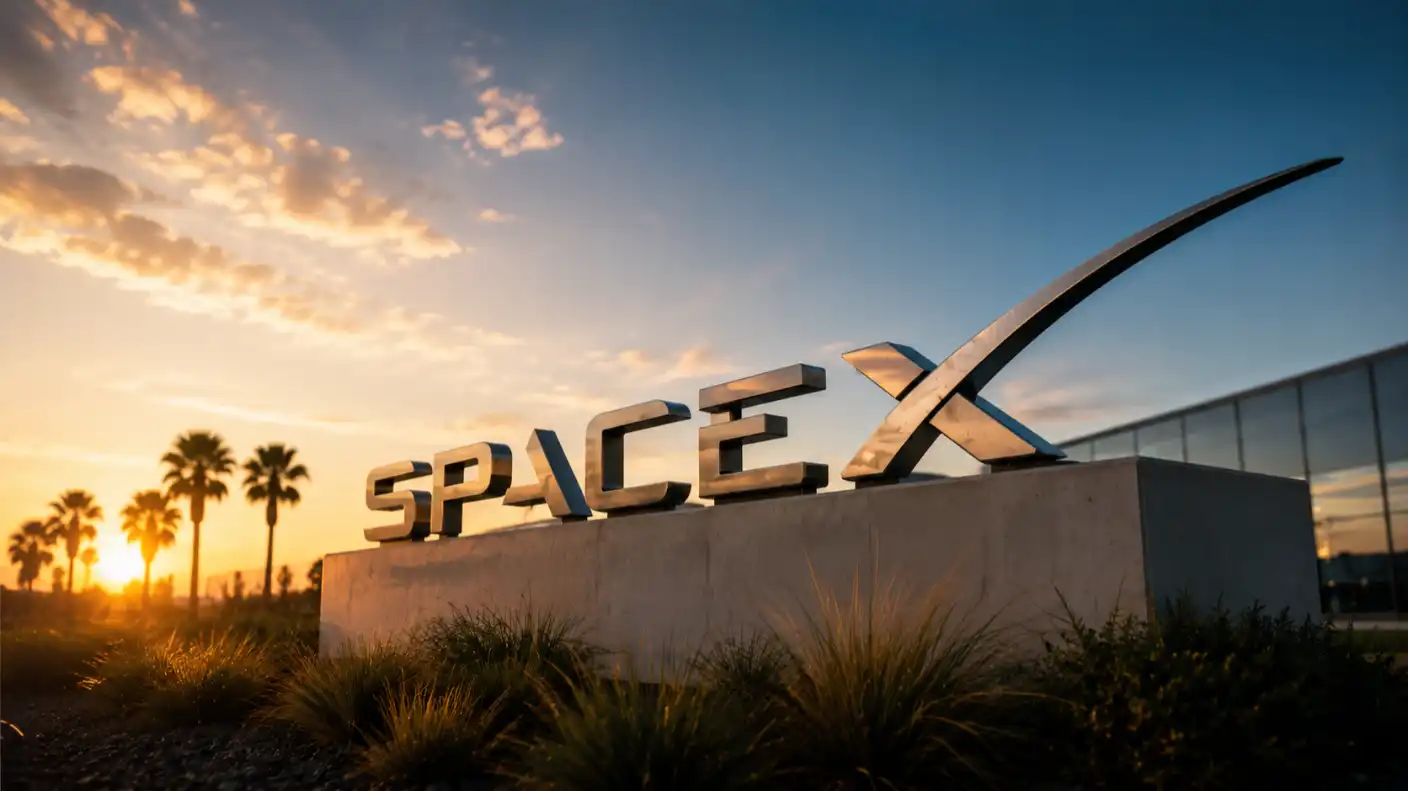
Elon Musk is on the brink of shattering global financial records. As his aerospace giant, SpaceX, prepares for a highly anticipated initial public offering (IPO) on the Nasdaq, market analysts suggest the move could push the billionaire’s personal net worth well past the $1 trillion mark. This potential milestone would make Musk the world’s first-ever trillionaire, cementing his legacy as the most successful entrepreneur in modern history. The upcoming public listing is not just a standard stock market entry; it represents the culmination of a decade of aggressive expansion across the satellite, rocket, and artificial intelligence industries.
For years, SpaceX operated as a private powerhouse, allowing Musk to pursue long-term projects like the Starship rocket without the constant pressure of quarterly earnings calls. However, as the company enters a new phase of massive infrastructure build-outs—including a planned constellation of one million satellites for orbital computing—the need for public capital has become undeniable. By listing on the Nasdaq, SpaceX gains access to the massive liquidity of the public markets, providing the firm with the financial runway needed to complete its most expensive “moonshot” projects.
The financial metrics driving this trillion-dollar ambition are driven by the company’s diversified portfolio. Following the merger with xAI, Musk’s artificial intelligence startup, the combined valuation of the SpaceX empire has soared. Investors are currently pricing the firm based on its ability to dominate the “space-based AI” sector. With companies like Anthropic reportedly paying over $1 billion for access to orbital data center capacity, the market clearly believes that SpaceX is no longer just a rocket company, but a critical layer of the future global digital economy.
The market debut of SpaceX is expected to be the largest in history, easily dwarfing the massive IPOs of tech giants like Facebook or Alibaba. Wall Street institutions are already preparing for the event, with major investment banks jostling for lead roles in the syndicate. Because the company manages a unique combination of essential satellite infrastructure and proprietary AI tech, demand for the stock is projected to be at an all-time high. Retail investors who have followed Musk’s career for years are expected to drive significant trading volume on the first day, potentially pushing the share price to extreme heights immediately after the opening bell.
Musk has always viewed his companies through a different lens than traditional corporate leaders. While standard firms prioritize short-term profit margins, Musk focuses on “first principles” engineering. He often argues that the company’s real value lies in its ability to lower the cost of reaching orbit by an order of magnitude. If SpaceX can maintain its current launch cadence and continue to refine its reusability technology, it will essentially control the “highway” to the stars. Investors who buy shares in this IPO are betting that this infrastructure will be just as important to the 21st century as the railroad and telecommunications networks were to the 20th.
This path to a trillion-dollar valuation is not without significant risk. The company currently faces immense pressure to prove that its “orbital computing” vision is more than just a marketing slogan. Developing a constellation of one million satellites requires a degree of manufacturing precision that has never been attempted. Any technical delay or failure in the deployment process could lead to a massive drop in market confidence. Even a 1.5% decrease in launch reliability could result in billions of dollars in losses, given the high costs associated with maintaining such a massive, interconnected network in low-Earth orbit.
Legal and regulatory scrutiny also remains a constant factor for Musk’s empire. As the company prepares for its Nasdaq debut, it faces a series of ongoing investigations from federal agencies regarding safety and labor practices. While Musk has successfully navigated these challenges in the past, a public company is subject to a much higher level of transparency and regulatory oversight. The upcoming prospectus will force SpaceX to disclose the full scope of these legal threats to shareholders, which may temporarily impact the stock’s performance during the initial trading phase.
The broader market will watch the SpaceX launch as a barometer for the entire tech sector. We are in the middle of a massive wave of AI-related IPOs, and SpaceX is the biggest wave of them all. If the company achieves its trillion-dollar valuation goal, it will provide a massive liquidity boost to the entire tech ecosystem. This influx of capital could fuel further innovation in robotics, clean energy, and advanced materials, creating a “virtuous cycle” of growth that benefits both the tech giants and the smaller companies that support their massive supply chains.
Whether Musk officially secures the title of “trillionaire” in the weeks following the IPO remains to be seen. His wealth is tied to the volatile stock performance of Tesla, SpaceX, and his other private ventures. However, the trajectory is unmistakable. By merging his space and AI businesses, Musk has created a company that holds a central position in the modern world. If he delivers on his roadmap for the next three years, he will not only have reached the stars but will also have rewritten the rulebook for what it means to be a global business leader.
For the retail investor, this IPO represents a rare chance to own a part of the company that arguably changed the trajectory of the human species. Whether you are a believer in the future of Mars colonization or simply want exposure to the AI hardware market, the debut of SPCX on the Nasdaq is a “must-watch” event. As the filing process concludes and the roadshow begins, the anticipation is building toward a record-breaking day that will likely stay in the history books for decades to come.