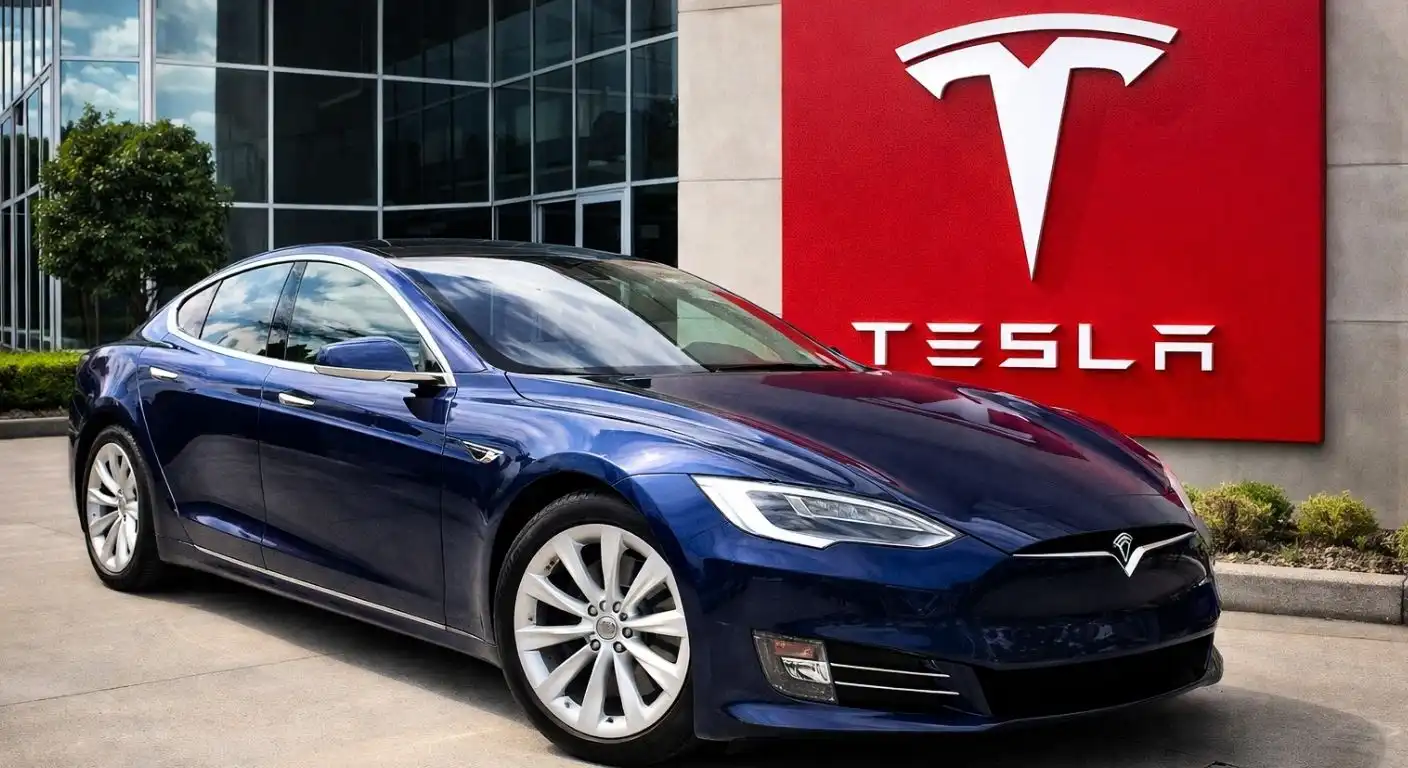
A quiet Friday evening in Katy, Texas, turned into an unimaginable tragedy when a Tesla Model 3 left the roadway and plowed directly into a residential home, claiming the life of a 76-year-old woman. The incident, which occurred around 8:00 p.m. on June 19, has left a local family devastated and sparked fresh questions regarding the safety of automated driver-assistance technology.
According to the Harris County Sheriff’s Office, the vehicle was traveling eastbound on Rose Hollow Lane when it failed to navigate a turn at an intersection. Instead of staying on the road, the car veered off, striking a brick residence at a high rate of speed. Martha Avila, the 76-year-old victim, was inside the home’s front room at the time of the impact. Emergency responders airlifted her to a local hospital, but medical teams were unfortunately unable to save her.
The driver, identified as 44-year-old Michael Butler, reportedly told authorities that his vehicle’s automated driving system was engaged at the moment of the crash. While officials have confirmed that the car was operating with an automated driver-assistance system, they emphasize that this information remains part of an ongoing investigation. Investigators are now working to verify the driver’s claims and determine what role, if any, the technology played in the loss of control.
In the wake of the accident, authorities confirmed that Butler showed no signs of intoxication and has cooperated fully with the investigation. No criminal charges had been filed as of Saturday afternoon. Neighbors who witnessed the scene described the chilling moment the vehicle flew through the neighborhood, with some estimates suggesting the car was traveling at speeds between 60 and 70 miles per hour before the collision.
The victim’s daughter, Jennifer Barbour, shared her profound grief, describing her mother as a healthy, vibrant woman who had years of life ahead of her. The home, which served as a family space for two parents and three children, sustained significant damage. Family members are now grappling with the sudden loss and the shock of a vehicle entering a space they considered a sanctuary.
This collision arrives at a time of intense regulatory scrutiny for Tesla’s driver-assistance features. While systems like Autopilot and Full Self-Driving (Supervised) are marketed to assist with steering and speed, the company explicitly maintains that these features require constant human supervision. Drivers are expected to keep their hands on the wheel and remain ready to take control at any second.
As investigators continue to pore over the details of this accident, the broader conversation surrounding autonomous vehicle safety intensifies. With the National Highway Traffic Safety Administration (NHTSA) already monitoring the performance of these systems, this latest fatality serves as a painful reminder of the human cost behind technical malfunctions. For the family of Martha Avila, however, the focus remains on mourning a life taken far too soon.