In today’s digital landscape, demand for content is insatiable. From social media feeds and marketing campaigns to product onboarding and web interfaces, static imagery is increasingly falling behind. Motion is the new standard for engagement. However, for years, a significant bottleneck has stifled the production of high-quality motion assets: the tools themselves.
Traditionally, high-end motion design was the exclusive domain of “lone specialists”—experts trained in bulky, hardware-intensive desktop software with steep learning curves. If a marketing team needed a simple animation, it often meant navigating a complex workflow of heavy file transfers, slow render times, and disconnected feedback loops.
Enter Jitter. Emerging as a direct response to a world where speed, collaboration, and efficiency matter more than ever, Jitter challenges the old paradigm. It promises to democratize motion design, shifting the power from complex, isolated workstations to a fluid, browser-based environment built for teams.
What is Jitter?
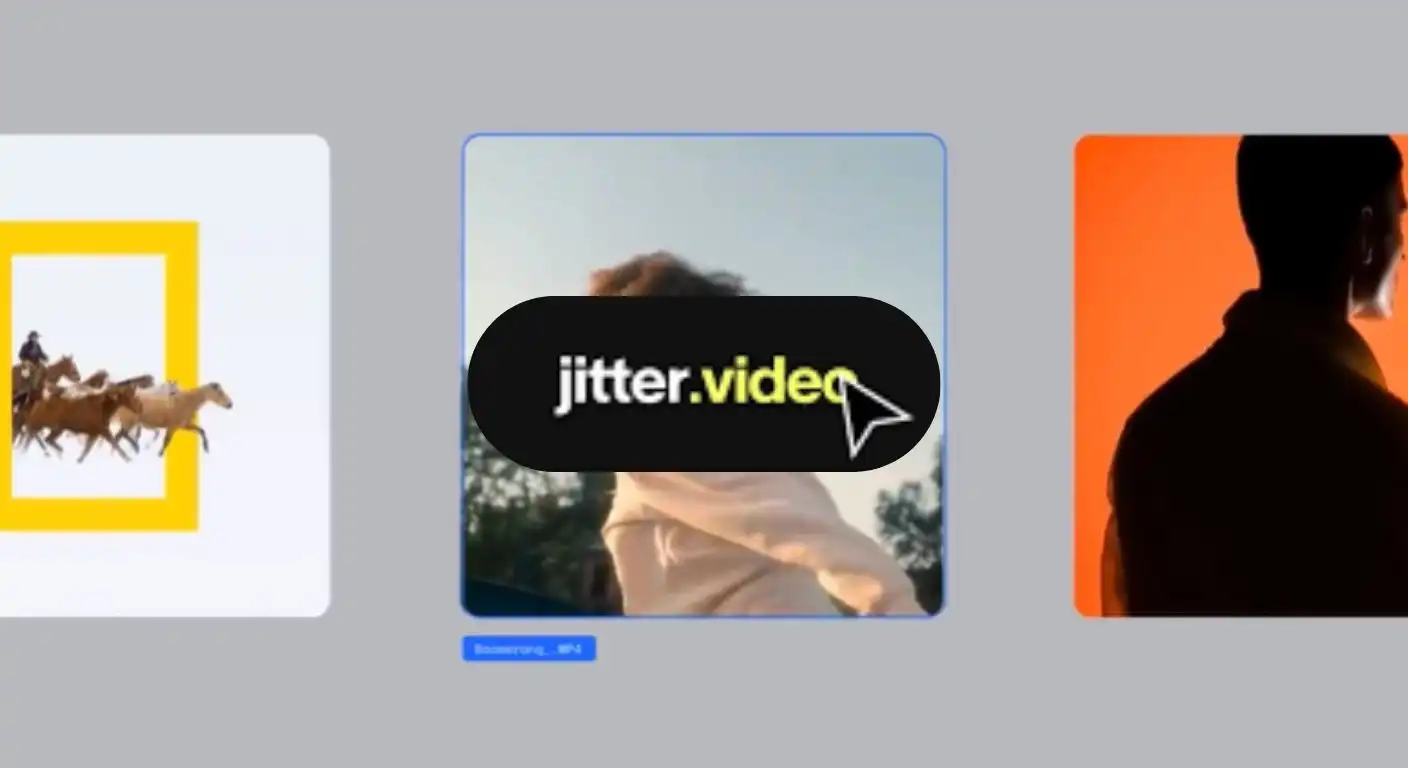
Jitter Video is a modern, web-native motion design tool built specifically for creative teams, not just individual animators. Think of it as the “Figma of motion design.” It occupies a compelling sweet spot in the market: it is far more powerful than basic template-based apps, yet significantly more accessible and streamlined than legacy professional motion graphics software.
At its core, Jitter is a “zero-install” solution. Because it runs entirely in the browser, there is no heavy software overhead, no massive updates to download, and no need for a high-performance rendering workstation. You simply open a tab, log in, and begin creating.
The platform is built on the principle that motion design should not require relearning the fundamentals of design. It offers a sleek, familiar environment that bridges the gap between static vector design and video, allowing users to bring designs to life as 4K video, GIFs, or Lottie files. It is built for speed and performance, aiming to turn tasks that previously took hours into minutes.
Recommendations and Ratings
Overall
-
Easy of Use - 85%
85%
-
Integration and Deployment - 90%
90%
-
Product Functionality - 80%
80%
-
Product Capablity - 90%
90%
-
Customer Support - 85%
85%

User Review
( vote)Key Features and Capabilities of Jitter
Jitter’s feature set is curated to balance ease of use with professional-grade depth. It avoids the feature bloat of traditional tools while providing everything a modern designer needs.
Familiar Design Workflow
Jitter’s interface mirrors the UI of popular modern design tools such as Figma and Sketch. Users are greeted with a familiar layout: layers on the left, an artboard in the center, and properties on the right. This means that UI designers, graphic designers, and marketers can start animating immediately without needing to learn a new paradigm. The ability to import media and vectors seamlessly allows for a frictionless transition from static design to motion.
Powerful Yet Accessible Animation Tools
Jitter caters to both beginners and experts.
- For Speed: The platform includes a robust library of built-in presets. Users can apply professional animations—fades, scales, masking, blurs, and motion—with a single click.
- For Control: Unlike basic apps, Jitter doesn’t lock you into presets. It offers fine-grained control for custom animations. Designers can manipulate ease curves to perfect the timing, use Bézier motion paths for complex movement, and even morph vector shapes. This depth ensures that the output never looks generic.
The Infinite Canvas
One of Jitter’s most innovative features is the infinite canvas. Instead of being trapped in a single timeline view, users can work on multiple artboards side by side. This is a game-changer for campaigns. A team can design an Instagram Story, a LinkedIn post, and a website header in a single view. This setup enables the reuse of templates, layers, and assets across formats, ensuring brand consistency and significantly reducing production time.
Flexible Professional Exports
A web tool is only useful if the output meets industry standards, and Jitter delivers high-fidelity results.
- Video: Export up to 4K resolution, including high-frame-rate support (120 fps) for ultra-smooth playback.
- Web & App: Jitter supports Lottie export, creating lightweight, code-based animations crucial for modern product design.
- Specialty Formats: Users can export transparent videos (essential for overlays) and optimized GIFs. There are also options for frame-by-frame export and seamless looping control.
Impact and Benefits of Jitter
The true value of Jitter lies in how it transforms creative teams’ workflows, particularly in marketing, branding, and product design.
Breaking Down Silos through Collaboration
Traditional motion design is often a lonely, disconnected process. Jitter introduces real-time collaboration to the animation workflow. Because everything is stored in a shared workspace, files can be shared via a simple link. Stakeholders—whether they are copywriters, product managers, or clients—can view animations and provide feedback directly in the browser. This eliminates the “email attachment” version control nightmare and allows teams to iterate together in one place.
Speed-Focused Performance
Jitter is engineered for performance. Navigating the UI is fluid, previews are instant, and exports are lightning-fast. This speed allows teams to be more agile. Marketing departments can respond to trends in real time, producing on-brand motion content in minutes rather than days. Reduced friction encourages experimentation, leading to better creative outcomes because the “cost” of trying a new idea is low.
Scalability for Agencies and Brands
For design-forward teams and creative agencies, maintaining a library of reusable elements and templates is vital. Jitter allows teams to build a “motion design system.” Once a master animation style is approved, it can be templated and rolled out across languages or campaign variants by different team members, ensuring the brand remains polished and consistent without the overhead of senior motion graphics supervision on every asset.
Conclusion
Jitter represents a necessary evolution in digital design tools. It acknowledges that in the modern creative workflow, motion is no longer a “nice-to-have”—it is essential.
By stripping away the complexity of traditional software and replacing it with a browser-native, collaborative, and intuitive interface, Jitter empowers teams to produce high-quality content at scale. It is the ideal solution for design-forward teams, product managers, and marketing departments who need to move fast without sacrificing quality.
If your goal is to produce Hollywood-level visual effects, traditional desktop software still holds the crown. However, for the 99% of use cases facing modern creative teams—marketing content, product interactions, brand assets, and social motion—Jitter provides a compelling, powerful, and efficient sweet spot. It is the tool that finally makes motion design accessible to the rest of us.