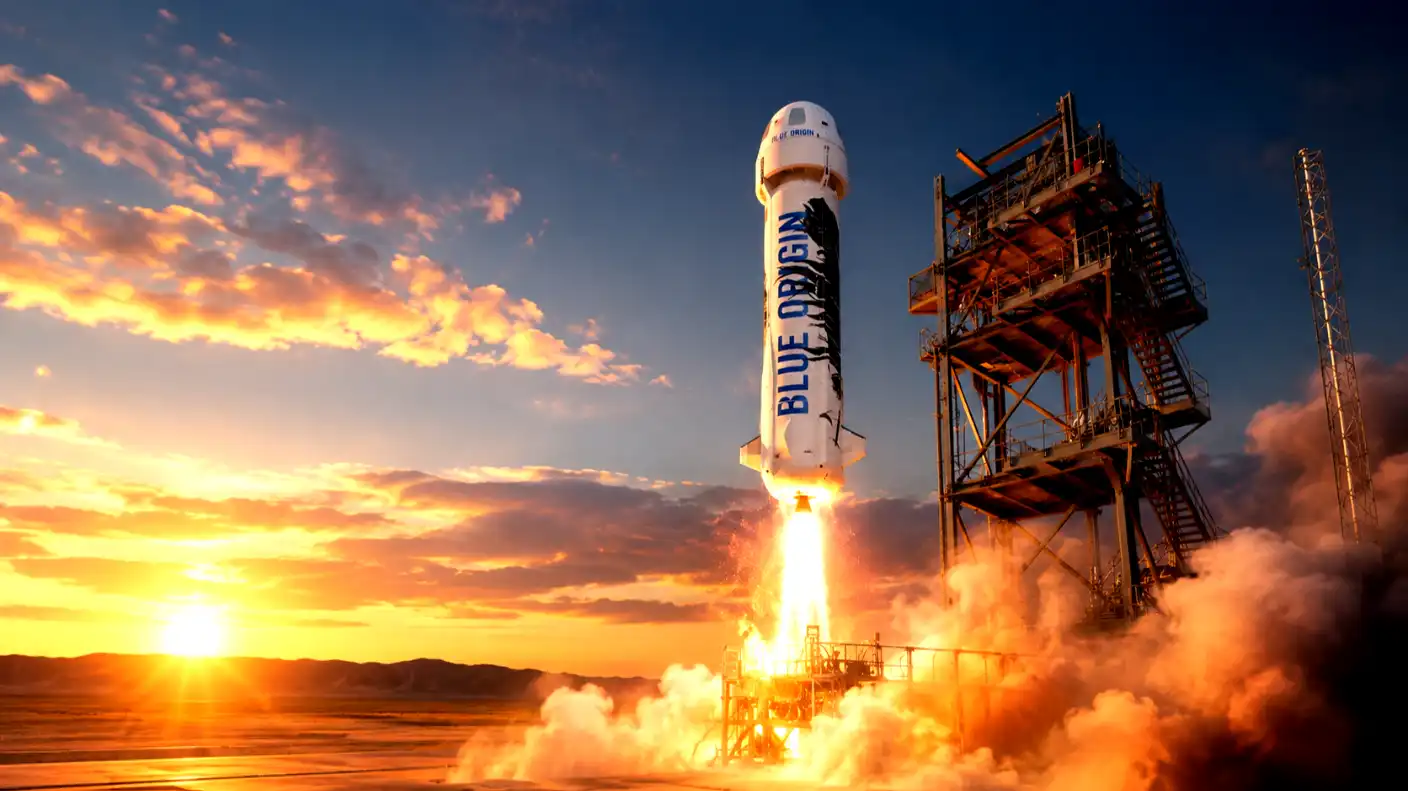
The aerospace industry is processing a significant blow to its long-term launch schedule after reports surfaced this week suggesting that Blue Origin’s damaged launch pad may remain out of commission until 2028. The facility, which serves as the primary ground base for the massive New Glenn rocket, suffered catastrophic damage during a pre-flight explosion in late May. While Jeff Bezos’ aerospace company initially hoped for a quick recovery, experts now believe the structural damage to the flame trench, electrical systems, and fuel handling infrastructure is far more severe than anyone initially anticipated.
This two-year recovery window creates a massive ripple effect for NASA’s upcoming lunar exploration plans. The Artemis moon program relies heavily on commercial partners like Blue Origin to develop the heavy-lift capabilities and lunar landers required for long-term missions. NASA officials recently met with aerospace entrepreneur Jared Isaacman to discuss how this delay impacts the timeline for Artemis IV. If the New Glenn rocket cannot reach the launch pad by 2028, NASA may be forced to renegotiate its primary mission deadlines or find alternative launch providers, adding hundreds of millions of dollars in unexpected costs to an already budget-strained program.
The explosion itself occurred during a standard cryogenic loading test, where liquid natural gas and liquid oxygen are pumped into the rocket’s tanks. Preliminary investigations suggest that a critical failure in the ground support interface caused the tanks to rupture. The resulting fire was intense enough to melt reinforced steel components and destroy sensitive diagnostic sensors located around the launch pad. Replacing this highly specialized equipment is not a simple task, as many of these components are custom-built and require months of lead time to manufacture and certify.
Financial analysts are already calculating the impact on Blue Origin’s bottom line. The company has invested well over $1 billion into the New Glenn program since its inception, viewing the rocket as the centerpiece of its ambition to compete with SpaceX and other commercial heavyweights. Every month the launch pad sits idle, the company loses out on potential launch fees from commercial satellite operators and government agencies. This lost revenue makes it significantly harder to maintain the massive workforce currently developing the rocket’s next-generation engines.
For the private space sector, this incident is a sobering reminder of the hazards inherent in developing heavy-lift launch vehicles. While companies often focus on the excitement of the flight, the ground infrastructure required to support these machines is equally complex and dangerous. The explosion at Cape Canaveral underscores that the “race to space” is often won or lost on the ground. A single valve failure during a test can undo years of engineering progress, serving as a cautionary tale for any firm hoping to revolutionize orbital transportation.
The impact on NASA’s lunar lander program is perhaps the most concerning part of the delay. Blue Origin secured a multi-billion dollar contract to help put humans back on the moon, and that lander is designed to launch on top of the New Glenn rocket. If the rocket is not flight-ready, the lander remains grounded on Earth. NASA administrators are currently evaluating whether to prioritize existing launch partners or risk further delays while waiting for Blue Origin to restore its facility. This choice is vital, as the U.S. remains in a geopolitical race to maintain a presence on the lunar surface.
Repairing the launch site involves more than just swapping out broken pipes. The entire infrastructure must undergo a rigorous safety review by the Federal Aviation Administration (FAA) before it can be used again. Given the scale of the damage, engineers must inspect every inch of the launch mount to ensure that the heat from the explosion did not compromise the foundation of the site. This certification process is designed to ensure that no debris or mechanical failures occur during future launches, but it adds substantial time to the recovery plan.
Industry competitors are likely watching this situation with a mix of sympathy and strategic interest. The aerospace market operates on thin margins, where a 1.5% increase in launch reliability is a massive competitive advantage. With Blue Origin effectively sidelined for the foreseeable future, other launch providers may see an influx of demand. This shift could temporarily drive up launch costs for satellite operators, as the total global capacity for heavy-lift missions becomes tighter during the two-year repair window.
Despite the gloomy outlook, the team at Blue Origin has a history of persistence. Jeff Bezos has always positioned Blue Origin as a “long-term” venture, and the company has the financial resources to absorb the cost of these repairs. The engineering teams are already planning a complete redesign of the fueling system to ensure that a similar accident cannot happen again. The focus has shifted from “launch speed” to “fundamental safety,” as the company looks to reassure its government partners that it remains the right choice for the Artemis program.
The next two years will be the most critical in the company’s history. They must prove to their investors and their government partners that they can turn this disaster into a stronger, safer foundation for the future. As the industry moves toward 2028, the success of the Artemis program and the viability of the New Glenn rocket will become inextricably linked. Blue Origin is now in a race against the clock to repair its pad, rebuild its rocket, and restore its status as a premier launch provider for the United States.