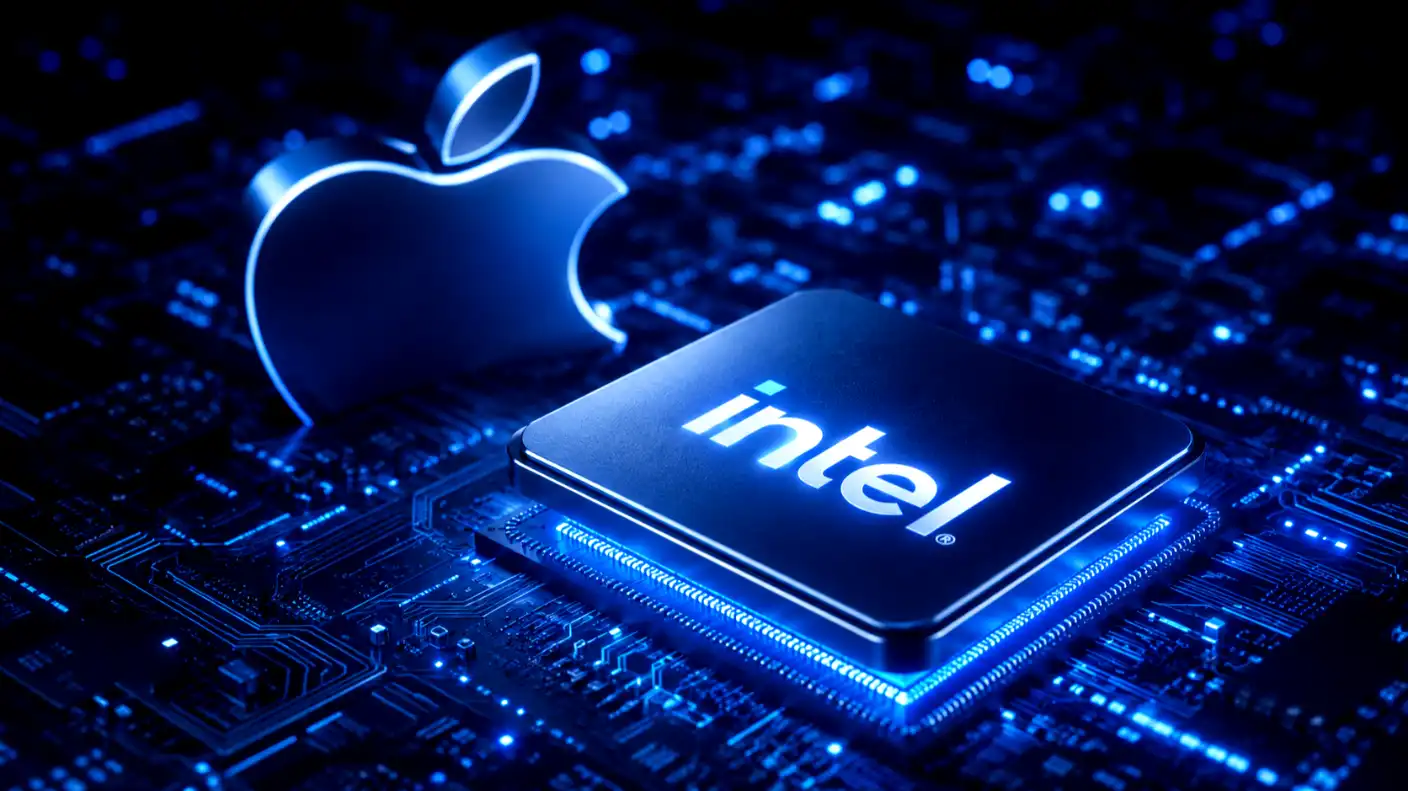
Bank of America analysts believe a rumored partnership between Apple and Intel will trigger a massive spending spree in the semiconductor industry. The financial institution recently estimated that a new chip manufacturing deal between the two technology giants could reach a staggering $10 billion in total value. If this partnership officially moves forward, it will send a giant wave of cash directly into the factory equipment market.
Right now, Apple relies almost entirely on the Taiwan Semiconductor Manufacturing Company to build the brains for its iPhones, iPads, and Mac computers. Taiwan currently holds a massive monopoly on Apple’s lucrative silicon business. Shifting even a fraction of those hardware orders over to Intel represents a monumental change for the global technology supply chain.
The Wall Street Journal recently confirmed these industry rumors. Reporters revealed that Apple and Intel finally signed a preliminary business agreement earlier this month. The two companies spent more than a year secretly negotiating the terms of this manufacturing contract behind closed doors. Currently, neither company will confirm exactly which Apple devices will actually use these new Intel-made chips.
According to the Bank of America report, this massive $10 billion contract will force Intel to heavily upgrade its assembly lines. Intel simply does not have enough empty factory space to handle Apple’s massive hardware volume. To meet the strict production deadlines, Intel must buy billions of dollars worth of brand new chip manufacturing machines.
Two specific Dutch technology companies stand to make an absolute fortune from this factory expansion. Bank of America highlighted ASML and BE Semiconductor as the biggest ultimate winners of the Apple and Intel partnership. These two European firms build the highly specialized heavy machinery that modern chip factories desperately need to operate.
ASML holds a very unique position in the global technology market. The company operates as the only business on the planet that builds Extreme Ultraviolet lithography machines. Factories use these massive EUV machines to physically print the microscopic circuits onto raw silicon wafers. Intel absolutely must buy more of these machines if it wants to manufacture Apple’s highly advanced processors.
Bank of America analysts outlined two very different financial scenarios for ASML. If Apple only hires Intel to build chips for its laptops and tablets, Intel will spend roughly €1.8 billion on ASML equipment. However, the math completely changes if Apple decides to move its highly profitable iPhone chip production over to Intel.
If the massive iPhone supply chain joins the deal, Intel will need to buy exactly 15 brand new EUV lithography machines. This specific hardware order would push Intel’s total spending at ASML to an incredible €4.6 billion. The iPhone volume requires massive factory power that Intel simply does not possess right now.
The second Dutch company, BE Semiconductor, faces the exact same volume dynamic. BE Semiconductor builds hybrid bonding machines. Engineers use these specific machines to safely package the fragile silicon chips and connect them directly to the main electronic circuit boards. Intel aggressively markets its own advanced packaging services right now because TSMC currently struggles to package enough chips for the booming artificial intelligence industry.
If Apple excludes the iPhone from the Intel contract, Intel will only order 15 hybrid bonding machines from BE Semiconductor. However, adding the iPhone to the manufacturing schedule forces Intel to buy an astonishing 182 hybrid bonding machines to keep the assembly lines moving.
To understand the sheer scale of this order, analysts point to Intel’s current long-term business plan. Before this Apple rumor even started, market experts expected Intel to buy a total of just 80 hybrid bonding machines between the years 2024 and 2030. Winning the iPhone contract alone would more than double their entire seven-year equipment budget.
This potential $10 billion agreement gives both technology giants exactly what they need. Apple secures a second highly reliable source for its most important computer chips, protecting the company from sudden delays in Taiwan. Meanwhile, Intel gets a massive influx of cash and the industry prestige it desperately needs to prove its ambitious factory turnaround strategy actually works in the real world.