
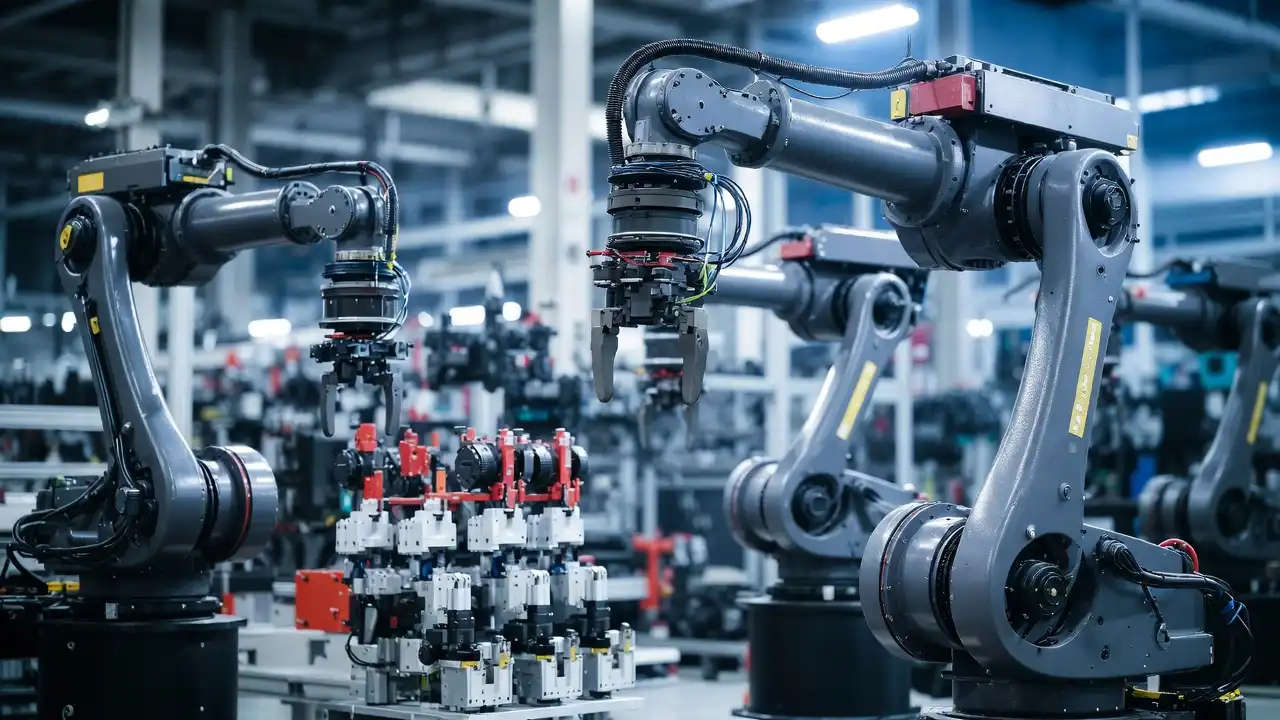
A small Silicon Valley startup is heading to Japan with a big goal: bringing artificial intelligence to the world’s largest robot makers. Integral AI, a company created by two former Google researchers, wants to completely change how industrial machines learn and operate on the factory floor.
The startup, which only has 15 employees, has already been working with Japanese auto parts giant Denso since 2021. Their software helps industrial robots learn new skills simply by watching humans demonstrate the task. Now, Integral AI is holding talks with major players like Toyota, Sony, Honda, and Nissan.
The company’s ultimate goal is to make robots so smart they can learn from simple spoken commands. Co-founder Jad Tarifi explained that they want a human operator to say something like, “make a coffee,” and the robot will figure out how to do it on its own.
This pitch makes perfect sense in Japan. The country is a global superpower when it comes to hardware, producing nearly 30% of the world’s industrial robots through companies like Fanuc and Yaskawa. However, Tarifi notes that while Japan is incredible at building the physical machines, they are lagging behind in the software and AI needed to make those machines truly intelligent.
Tarifi, who started Google’s first generative AI team over a decade ago, approaches AI differently than many others. He is trying to build software that mimics the way a child’s brain learns. He wants his AI to learn new things quickly without forgetting old information, a common problem with current AI models.
If successful, this technology could unlock a new era of “physical AI.” Tarifi envisions a future where smart machines can handle incredibly complex jobs, from designing new batteries to discovering new medical drugs. Eventually, he believes we can use these advanced AI models to teach robots how to build entirely new types of robots, whether for cooking, cleaning, or assembling smartphones.