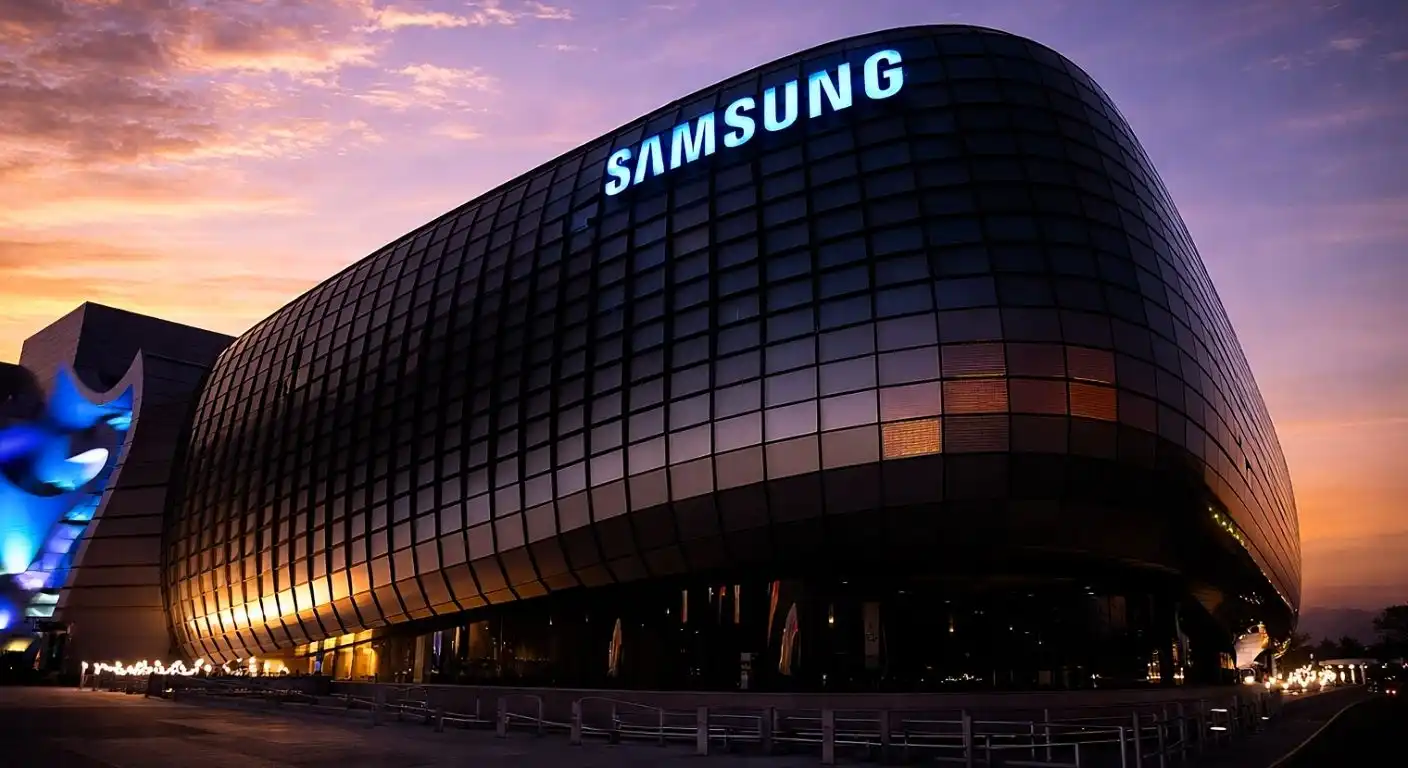
Samsung Electronics announced an incredible increase in its first-quarter operating profits on Thursday. The company’s profits jumped more than eight times higher than last year, setting a new record and beating what analysts expected, all thanks to the explosive growth of its chip business. Here’s how Samsung’s first-quarter numbers compare to LSEG SmartEstimate, which focuses on forecasts from the most accurate analysts: Revenue: 133.9 trillion Korean won ($89.96 billion) vs. 132.69 trillion won expected, Operating profit: 57.2 trillion won vs. 55.28 trillion won expected. The South Korean tech giant’s quarterly profit climbed over 750% from a year ago, reaching a new high. The company also reported record revenue, up about 70% compared to last year.
These profits matched Samsung’s own predictions of 57.2 trillion won and even surpassed its total profits for all of 2025, which were 43.6 trillion won. This strong performance continues the momentum from the end of last year, when Samsung broke its previous record of 17.6 trillion won set in late 2018.
Samsung’s record earnings came mainly from its powerful chip business. Besides making smartphones and offering semiconductor foundry services, the company is a leading producer of memory chips. The firm’s chip business has greatly benefited from the global boom in AI data centers. This boom has limited chip supply and driven up prices for memory chips used in data centers and electronics like smartphones, PCs, and game consoles.
In its earnings report, Samsung stated that it expects demand for server memory to remain strong in the second half of the year. This is because big cloud companies keep adopting AI, and the need for “agentic AI” (AI that can act on its own) is growing quickly. Samsung’s shares rose about 0.9% in South Korea after the earnings report, bringing its gains for the year so far to around 90%.
Samsung’s chip business, known as its DS (Device Solutions) division, includes its memory chip, semiconductor design, and foundry business units. This division reported an operating profit of 53.7 trillion Korean won in the first quarter, a huge jump from just about 1 trillion Korean won in the same period last year. These profits made up more than 90% of the company’s total earnings for the quarter.
Overall chip sales reached 81.7 trillion Korean won, up 225% from last year. This strong showing happens as Samsung keeps expanding its high-bandwidth memory (HBM) business, which is a key part of AI data center chips. Chipmakers like Nvidia, the world’s most valuable company, have boosted demand for HBM, even with limited supplies. As manufacturers focus on making more profitable AI-related chips, supply shortages have pushed up prices for memory used in everyday electronics.
In its earnings report, Samsung said its memory business “surpassed its quarterly sales record by meeting high-value AI demand despite limited supply, with rising memory prices across the industry also playing a role.” However, Samsung has faced tough competition in the HBM market. It lost an early lead to its rival, SK Hynix.
Samsung has been working hard to catch up to SK Hynix in this profitable technology. In February, it announced it was the first in the world to mass-produce HBM4 memory chips and ship them to unnamed customers. HBM4 is the sixth and most advanced generation of HBM technology. It is expected to be the main AI memory chip used in Nvidia’s next-generation Vera Rubin architecture, designed for powerful AI tasks in data centers.
SK Hynix first announced it was sending samples of its HBM4 to customers in March of last year and said it had prepared HBM4 for mass production in September. However, the company has not yet announced commercial shipments of HBM4.
“Samsung has improved in HBM4, and the gap with SK Hynix is smaller compared to earlier HBM generations,” said Ray Wang, an analyst at SemiAnalysis, who covers memory from Seoul. “Yet, we still see SK Hynix leading the HBM race against its competitors,” he added. According to data from Counterpoint Research, SK Hynix continued to lead the HBM market with a 57% revenue share in the last quarter of last year.