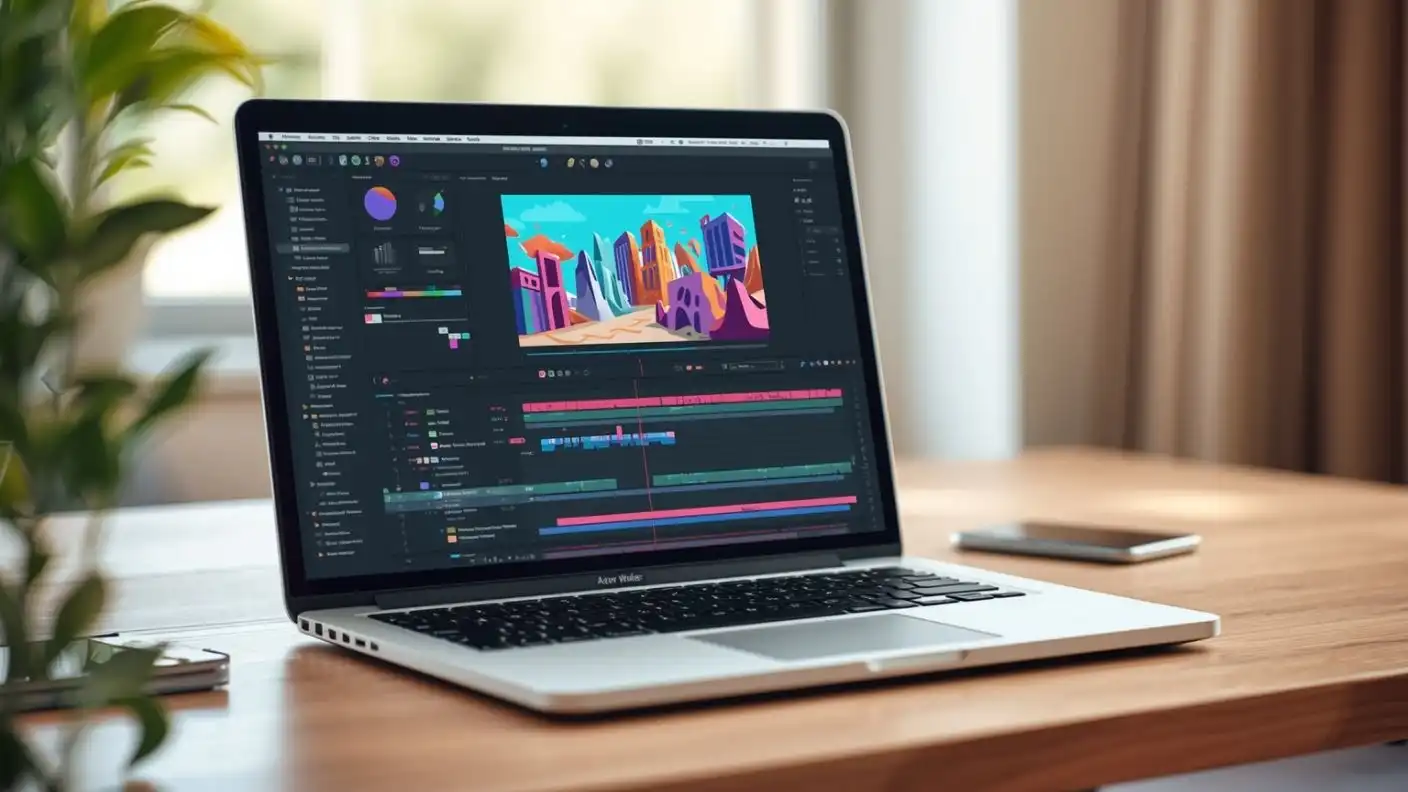
The motion graphics industry in 2026 is moving at a breakneck pace, fueled by the explosive demand for dynamic UI/UX animations, immersive 3D web experiences, and eye-catching social media video content. Static design is a thing of the past; today’s brands require kinetic, engaging visuals to capture the fleeting attention of digital audiences. To keep up with these demands, motion designers are relying on software that seamlessly blends artificial intelligence, real-time rendering, and procedural workflows.
Choosing the right software can dramatically reduce your rendering times and unlock entirely new creative pipelines. Whether you are a solo freelancer animating 2D explainer videos or a studio director leading a team on a 3D broadcast package, your toolset dictates your creative ceiling. If you want to stay ahead of the curve and produce mind-bending animations, here is our definitive guide to the top 5 motion graphics software platforms dominating the industry in 2026.
Adobe After Effects
Adobe After Effects remains the undisputed heavyweight champion of the 2D and 2.5D animation world in 2026. Its seamless integration with the Adobe Creative Cloud and powerful new generative AI tools make it an indispensable asset for commercial animators.
- Adobe Firefly Integration: Use text-to-video and generative fill features directly within your timeline to instantly generate custom backgrounds, textures, and animated assets.
- True 3D Workspace: The overhauled 3D engine allows designers to import native 3D models (OBJ, GLTF) and light them directly in the composition without relying on third-party plugins.
- Advanced AI Rotoscoping: The next-generation Roto Brush isolates complex subjects, like blowing hair or transparent glass, with a single click and tracks them flawlessly across frames.
- Massive Plugin Ecosystem: Retains the largest ecosystem of third-party plugins in the world, allowing users to customize their workflow for specialized particle effects and glitch art.
Cinema 4D (Maxon)
Maxon’s Cinema 4D is the ultimate playground for artists looking to push the boundaries of high-end 3D motion design. Renowned for its unparalleled stability and intuitive MoGraph toolset, it has become the default software for broadcast and commercial 3D animation.
- The MoGraph Module: An industry-defining procedural animation system that allows artists to clone, fracture, and manipulate thousands of 3D objects with a few simple effectors.
- Redshift Real-Time Rendering: Fully integrated with Maxon’s Redshift renderer, providing GPU-accelerated, photorealistic rendering speeds that handle complex glass and metal materials effortlessly.
- AI-Assisted Dynamics: Features AI-driven simulation tools for cloth, rigid bodies, and soft bodies, calculating realistic physical collisions in a fraction of the time.
- Seamless After Effects Link: The Cineware bridge creates a live, frictionless pipeline between Cinema 4D and After Effects, allowing you to composite 3D passes without pre-rendering.
Cavalry
Cavalry has aggressively disrupted the 2D motion graphics landscape by offering a purely procedural, node-based workflow. It is specifically engineered to handle complex, data-driven animations that would traditionally crash older layer-based timeline software.
- Procedural Node-Based Engine: Connect behaviors and modifiers together visually, allowing you to make sweeping changes to thousands of elements instantly without breaking keyframes.
- Real-Time Playback: Bypasses the need for constant RAM previewing, offering buttery-smooth real-time playback even when manipulating thousands of vector shapes.
- Data-Driven Animation: Connect live data sources like Google Sheets or JSON files directly to your graphics to automatically generate personalized, dynamic video campaigns at scale.
- Advanced Typography Control: Offers unparalleled control over text animation, allowing designers to manipulate individual letters, words, and lines procedurally.
Blender
Blender continues to shatter the ceiling of what open-source software can achieve, standing toe-to-toe with premium enterprise applications. In 2026, its revolutionary Geometry Nodes system has transformed it into a procedural motion graphics powerhouse.
- Geometry Nodes: A robust visual scripting system that lets motion designers build complex, looping abstract animations, generative environments, and scattering effects from scratch.
- Eevee Next Renderer: The updated real-time rendering engine produces stunning, ray-traced lighting and reflections instantly, drastically cutting down delivery times for clients.
- Grease Pencil 3: A unique 2D-in-3D animation tool that allows artists to draw traditional 2D frame-by-frame animations directly onto 3D surfaces and camera paths.
- Completely Free Ecosystem: Offers a professional-grade 3D pipeline—including modeling, rigging, simulation, and compositing—with zero subscription fees or licensing costs.
Unreal Engine 5 (Motion Design Toolset)
Unreal Engine is no longer just for game developers; its dedicated motion design toolset has completely revolutionized broadcast graphics and live event visuals. By rendering complex 3D scenes in real time, it eliminates the agonizing wait times associated with traditional post-production.
- Project Avalanche (Motion Design Mode): Features a dedicated 2D/3D motion graphics interface specifically built for creating lower thirds, title sequences, and broadcast packages.
- Zero Render Times: Utilizes the Nanite and Lumen engines to deliver photorealistic, path-traced graphics instantly, allowing clients to see final-quality work during live review sessions.
- Blueprint Visual Scripting: Allows motion designers to create complex, interactive animations and logic without needing to write a single line of C++ code.
- Virtual Production Integration: Seamlessly integrates your motion graphics with LED volumes and live-action camera tracking, creating mind-bending mixed reality broadcasts.
Conclusion
The motion graphics software landscape in 2026 offers an incredibly diverse array of tools tailored to specific artistic workflows and technical demands. If you are doing generalist 2D compositing and VFX, Adobe After Effects remains the mandatory industry standard. For 3D commercial work and broadcast, Cinema 4D provides the most artist-friendly toolset on the market. If your work involves data-driven 2D UI/UX animations, Cavalry will save you hundreds of hours. For budget-conscious creators who want limitless 3D procedural power, Blender is an absolute marvel. Finally, for studios looking to kill render times and embrace real-time broadcast graphics, Unreal Engine 5 is the future. By mastering the right software for your niche, you can transform static concepts into mesmerizing visual experiences that captivate the modern world.