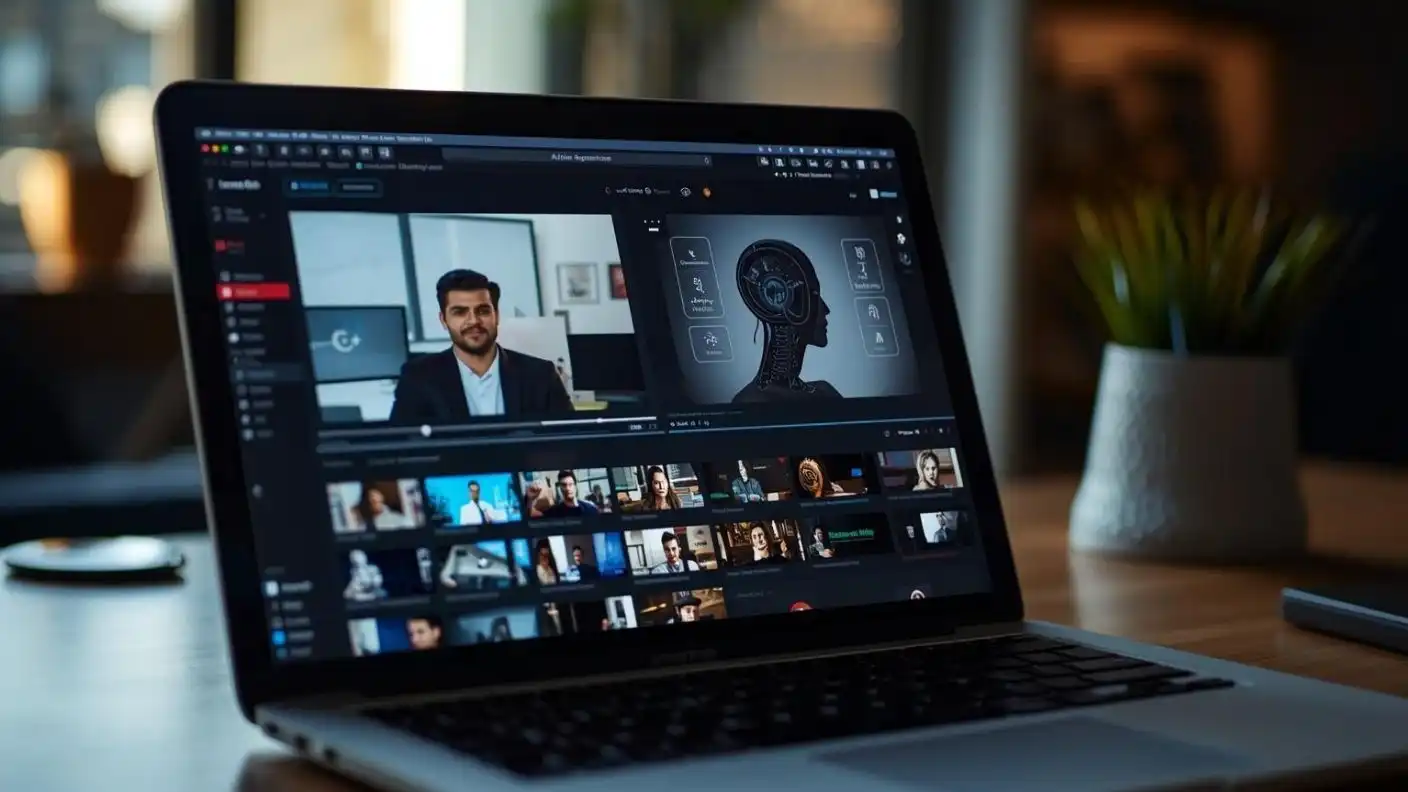
The video production industry in 2026 has reached a tipping point where “prompt-to-feature” is no longer a dream but a daily reality for creators. We have moved past the era of shaky, morphing clips into an age of perfect temporal consistency, generative physics, and cinematic-grade resolution that rivals traditional filming.
In 2026, these tools are not just replacing stock footage; they are acting as entire film crews, lighting departments, and VFX houses contained within a single interface. Here are the top five AI video generator software platforms leading the revolution this year.
OpenAI Sora Pro
OpenAI Sora has evolved from an experimental showcase into a professional-grade production suite capable of generating full five-minute sequences in a single pass. In 2026, its “World Engine” allows for perfect physical interactions, meaning water splashes and fabric movements behave exactly as they do in the real world.
This platform remains the gold standard for high-fidelity realism and narrative depth. Professional filmmakers and ad agencies favor Sora Pro for the following reasons:
- Temporal Coherence 2.0: Ensures characters and environments remain identical across multiple scenes and camera angles.
- Directorial Prompting: Allows users to specify lens types (e.g., 35mm anamorphic) and complex camera movements like “dolly zooms” via natural language.
- Neural Sound Overlay: Automatically generates synchronized spatial audio and foley effects that match the visual action perfectly.
Runway Gen-4
Runway continues to lead the market in creative control, offering a suite of “Director Tools” that allow for granular manipulation of AI-generated frames. In 2026, their “Motion Brush” has been upgraded to a 3D depth-aware tool, allowing editors to animate specific objects with surgical precision.
Runway is the preferred choice for those who need to blend AI generation with traditional post-production workflows. Its most powerful features this year include:
- Multi-Motion Control: Allows for the independent animation of up to ten different elements within a single frame.
- AI Style Transfer: Instantly transforms live-action footage into any aesthetic, from oil paintings to hyper-realistic 3D animation, while keeping the original performance intact.
- Real-Time Collaborative Canvas: A cloud-based space where teams can co-edit AI video streams in real-time, much like a shared design document.
HeyGen Enterprise
HeyGen has solidified its dominance in the corporate and marketing sectors by perfecting the “Digital Twin” technology. By 2026, their avatars are indistinguishable from real humans, featuring micro-expressions and emotional tonality that make personalized video at scale feel truly authentic.
For businesses looking to localize content globally, HeyGen provides an unmatched ROI. Notable features in the 2026 Enterprise edition include:
- Instant Multilingual Dubbing: Automatically translates speech into 120+ languages, perfectly re-mapping the avatar’s lip movements to the new phonemes.
- Interactive Video Agents: AI avatars that can host live webinars or respond to customer queries in real-time with zero latency.
- API-Driven Personalization: Generates thousands of unique videos for email campaigns, addressing each recipient by name and referencing their specific data.
Luma Dream Machine 3.0
Luma Labs has carved out a massive niche by focusing on “Generative Spatial Intelligence,” making it the go-to for high-action sequences. In 2026, the Dream Machine 3.0 is widely used for car chases, sports simulations, and any content where complex 3D spatial awareness is required.
The software excels at maintaining the “weight” and “momentum” of objects, preventing the floaty look common in earlier AI models. Its core 2026 strengths are:
- 3D Scene Export: Allows creators to generate a video and then export the underlying 3D Gaussian Splatting environment for use in game engines.
- High-Speed Action Mapping: Specialized algorithms that prevent motion blur artifacts during fast-paced, high-frame-rate sequences.
- End-to-End Storyboarding: Converts a simple text treatment into a consistent 2D storyboard and then into a fully rendered 3D video.
Adobe Firefly Video
Adobe has integrated AI video generation directly into the Creative Cloud ecosystem, emphasizing ethical training and legal safety. In 2026, Firefly Video is the primary tool for enterprise brands that require “Copyright-Clean” assets for commercial use without the risk of intellectual property infringement.
The software is seamlessly woven into Premiere Pro and After Effects, acting as a powerful assistant rather than a standalone replacement. Its standout features include:
- Generative Extend: Automatically adds frames to the beginning or end of a clip to fix timing issues in an edit.
- Text-to-VFX: Generates atmospheric effects like fire, smoke, or magical particles that can be layered directly over live-action footage.
- Brand-Kit Integration: Allows companies to “train” a private version of the AI on their own brand colors, logos, and stylistic guidelines.
Conclusion
The landscape of AI video generation in 2026 is defined by a shift from “novelty” to “utility.” Whether you are using the cinematic power of Sora, the creative precision of Runway, or the enterprise scale of HeyGen, these tools are democratizing the ability to tell complex visual stories. As these platforms continue to evolve, the barrier between a brilliant idea and a high-definition feature film will continue to vanish, ushering in a new era of human-AI collaborative creativity.