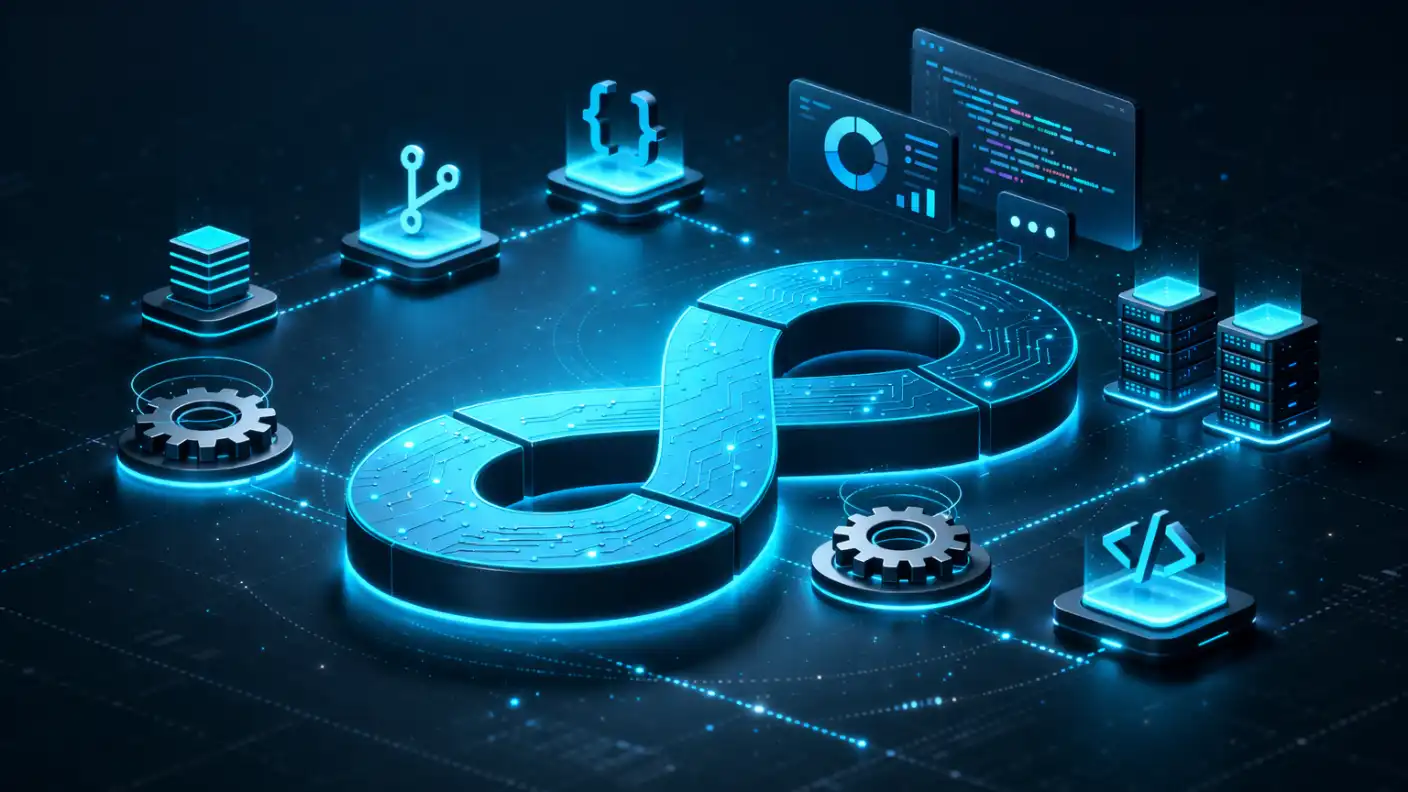
We once managed software releases like high-stakes surgical procedures. A team of tired engineers gathered in a dark room at midnight, typed out manual commands, and prayed the entire system did not crash. They called this “deployment day,” and everyone dreaded it. Today, that manual nightmare has vanished. We now run our digital world on fully automated pipelines. Code moves from a developer’s laptop to a global customer’s screen in minutes, without a single human finger touching the server. This automation has changed software from a static product into a living, breathing organism. As we look at the future of DevOps, we see a world where the pipeline does not just run the code; it manages the entire health of the business.
The End of the Manual Gatekeeper
The old method relied on human gatekeepers. A quality assurance team sat between the developers and the live customers, manually testing every single change. This created a massive, permanent bottleneck. If the developers built ten great new features, the testing team could only verify three of them. The other seven sat on a digital shelf, gathering dust. Fully automated pipelines destroy this gatekeeper model. We now write thousands of automated tests that run in parallel. If a new update fails a single check, the pipeline kills the process and tells the developer exactly what went wrong. We traded the human bottleneck for a relentless, perfect machine gatekeeper.
Code That Deploys Itself Without Permission
We reached a stage where the pipeline acts as an autonomous agent. In the past, a human manager had to click the “deploy” button. That feels silly now. Why wait for a person to wake up or finish their coffee to push an update? If our automated tests pass, and our security scans come back clean, the software simply ships itself. This concept, known as continuous deployment, means the customer gets the latest improvements the very second they arrive. The pipeline constantly scans for ways to improve, optimizes its own traffic routes, and ships features as soon as they become stable.
The Shift from Building to Observing
When you automate the act of building and shipping code, the role of the DevOps engineer changes forever. You stop being a digital construction worker and start being a digital doctor. You spend your days watching the “telemetry”—the live streams of data that show how the system feels. If the error rate rises by even one percent, the pipeline automatically rolls back the update to a previous, stable version. We no longer try to prevent every single error. Instead, we build systems that handle failure gracefully. We accept that the machine will break, and we ensure it heals itself before the customer even sees a glitch.
Security Baked into the Pipeline
We previously treated security as a final step. We built the software, and then we ran a security scan at the very end. This often forced engineers to choose between being safe or being fast. The future of DevOps resolves this fight through DevSecOps. Security scans live inside the pipeline itself. Every single time a developer saves a piece of code, the system checks for vulnerabilities, password leaks, or bad configurations. If the code looks dangerous, the pipeline refuses to build it. We make security a non-negotiable part of the daily workflow, rather than an annoying hurdle we try to jump over at the last minute.
Infrastructure as Code Becomes the Law
We used to manage servers like delicate pets. We gave them names, we pampered them, and we manually tweaked their settings. If a server died, we cried and tried to revive it. Now, we treat servers like cattle. We define our entire infrastructure using simple, repeatable text files. If a server becomes slow or corrupt, the automated pipeline simply deletes it and spawns a brand new, perfect copy in seconds. By treating the foundation of our internet as flexible, disposable code, we created an infrastructure that is virtually impossible to destroy. We don’t fix broken things; we replace them instantly.
The Pipeline as the Central Nervous System
We currently reach a stage where the DevOps pipeline manages much more than just software. It manages the business. When the marketing department runs a massive global campaign, the pipeline automatically detects the spike in traffic and rents extra server power to handle the load. When the sales team lands a new contract, the pipeline automatically provisions the new accounts and sets up the permissions for the new users. The pipeline has become the central nervous system of the company. It connects the business goal directly to the technical execution, removing the communication gap that historically slowed down every major firm.
The Human Factor in a Machine World
With so much automation, we have to ask what the humans actually do. Does DevOps erase the need for skilled engineers? Absolutely not. It elevates them. When the machine handles the boring, manual tasks, the engineer finally has the time to design better systems. They spend their time solving the big, complex problems that the pipeline cannot yet understand. They plan the next generation of architecture, they refine the security strategy, and they coach the junior team members. We traded the drudgery of manual labor for the high-level work of architecture and design.
Scaling to a Global Perspective
Managing a pipeline for a small shop in one city is simple. Managing a pipeline that serves millions of users across every continent is an incredible technical challenge. The future of DevOps focuses on global scale. We use “multi-region” deployment, where the automated pipeline balances the load between data centers across the entire planet. If an undersea cable breaks, the pipeline moves the workload to a different region instantly. We build systems that are globally distributed, locally performant, and resilient against any disaster. The global view of DevOps ensures that the software experience remains perfect, no matter where the customer sits.
Conclusion
We do not just build software anymore; we build the systems that build software. The future of DevOps lies in this total automation, where the pipeline manages its own health, its own security, and its own scale. We removed the human bottlenecks, the midnight deployment panics, and the manual errors. We created a world where digital innovation moves as fast as human thought. As we look ahead, our success depends on our ability to design pipelines that are even smarter, safer, and more resilient. The era of manual intervention has passed, and the era of the autonomous, self-managing digital factory has finally begun.