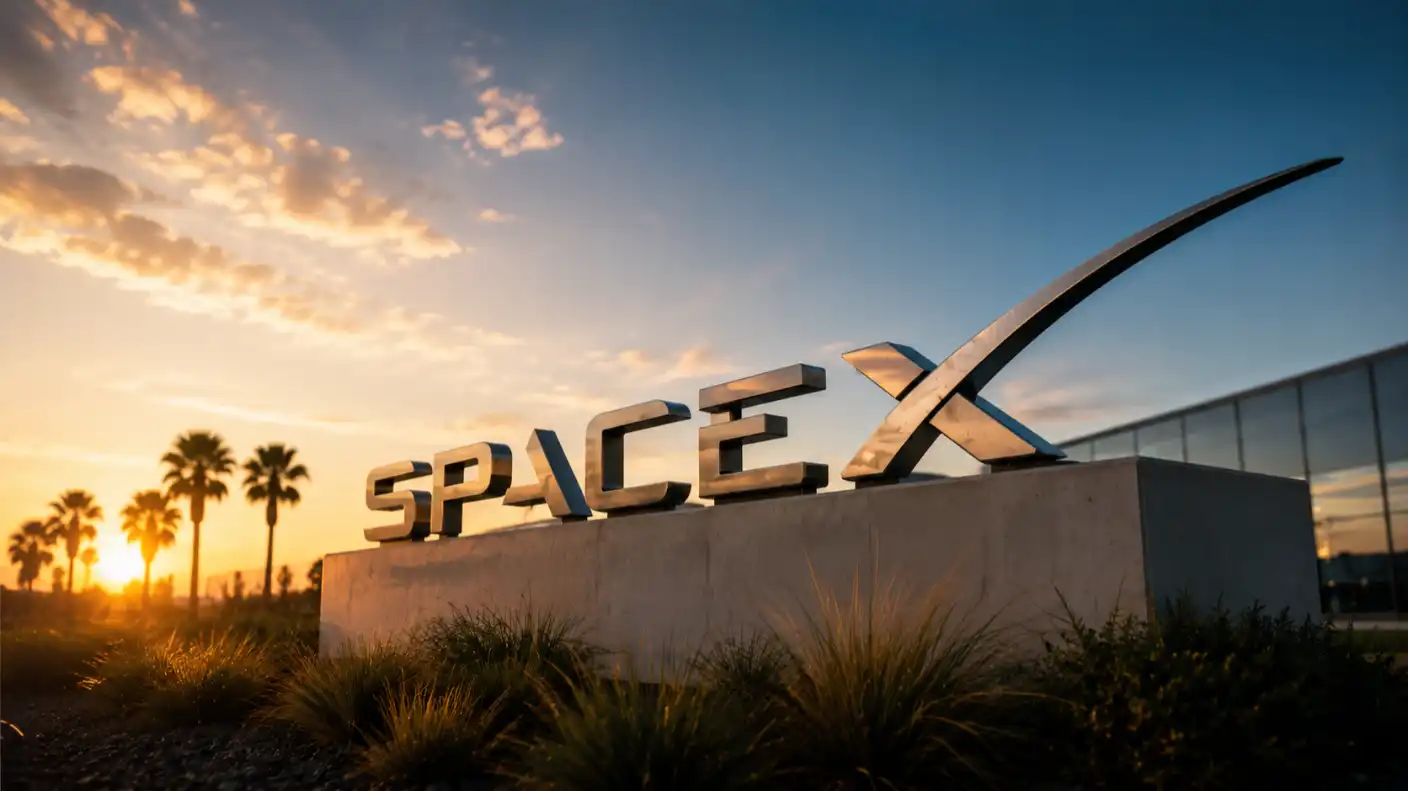
In one of the largest government procurement deals in history, the United States Space Force officially awarded SpaceX a contract worth $416 billion on Friday. This massive long-term agreement cements the aerospace firm’s role as the primary provider of launch services for national security missions. The deal focuses on modernizing America’s orbital infrastructure, deploying next-generation satellite constellations, and ensuring the U.S. maintains a decisive strategic edge in the increasingly crowded theater of low-Earth orbit.
This contract dwarfs previous defense spending in the aerospace sector. While the federal government has historically spent roughly $1 billion on individual launch batches, this new, multi-year framework streamlines the entire process. By committing to a massive, centralized contract, the Space Force expects to significantly reduce the cost per launch. Officials estimate that this consolidated strategy will save taxpayers roughly 1.5% in operational costs annually, compared to the fragmented bidding process used in the past.
The agreement requires SpaceX to manage a high-frequency launch cadence using its newest heavy-lift vehicle, Starship. The military needs this rocket’s massive payload capacity to loft heavy “spy” satellites and advanced communication arrays that are too large for standard launch platforms. The deal also covers the maintenance of the Starlink-for-government network, which has become a vital communication tool for military units operating in remote or contested environments where traditional terrestrial signals often fail.
National security experts view the contract as a direct response to rising competition from foreign space programs. As other nations rapidly expand their own satellite constellations, the U.S. military requires a reliable partner that can launch hardware at a moment’s notice. The Space Force emphasized that the speed and reusability of SpaceX rockets were the deciding factors. Because the company can turn around a rocket in days rather than months, it provides the “tactical agility” necessary to replenish damaged or inactive satellite networks during a time of international crisis.
The investment also secures a dedicated production line for government-only hardware. SpaceX will dedicate specific portions of its Texas and Florida facilities to assemble satellites and launch vehicles that meet military-grade encryption standards. This physical separation between commercial and defense hardware ensures that sensitive components remain protected from potential industrial espionage. The company is already planning to hire thousands of new specialized engineers to staff# SpaceX Secures Record-Breaking $416 Billion Space Force Launch Contract
The United States Space Force has awarded SpaceX a massive, long-term contract valued at approximately $416 billion to manage and conduct military satellite launches. This agreement stands as one of the most significant defense commitments in aerospace history. By securing this deal, SpaceX effectively locks in its role as the primary logistics provider for America’s national security missions for the next decade. The sheer scale of this investment demonstrates how deeply the Department of Defense now relies on private industry to maintain dominance in low-Earth orbit.
This contract represents a fundamental shift in how the Pentagon handles orbital operations. Instead of managing short-term, mission-specific launch agreements, the Space Force chose to consolidate its launch requirements into a single, comprehensive program. This stability allows SpaceX to plan its flight manifests years in advance, ensuring that vital surveillance, communication, and intelligence-gathering satellites reach their intended destinations without the typical delays associated with government procurement cycles. For SpaceX, this deal provides the reliable, recurring revenue necessary to fuel the next phase of its reusable rocket development.
The operational requirements under this contract are immense. SpaceX must provide guaranteed launch windows for a diverse array of military payloads, ranging from small, tactical satellites to massive, high-orbit infrared sensors. To meet these demands, the company plans to utilize its robust Falcon 9 and Falcon Heavy fleets, while gradually phasing in the more powerful Starship vehicle for heavier, deep-space government missions. This strategy aligns perfectly with the Space Force’s goal of launching at a much higher frequency than has been possible with traditional, non-reusable rocket systems.
Financial analysts monitoring the defense sector suggest that this deal serves as a massive endorsement for SpaceX’s upcoming public listing. With $416 billion in potential business over the life of the contract, the company can project long-term financial health that few other aerospace firms can match. This contract provides the kind of long-term “revenue visibility” that public market investors crave. It also places SpaceX in a league of its own, far ahead of traditional aerospace contractors that have historically struggled with the high costs and slow production timelines of government space flight.
Safety and security are built into the heart of this agreement. Because the Space Force manages highly classified technology, SpaceX must adhere to strict security protocols at its launch sites and mission control centers. The company has invested heavily in redundant communications and hardened hardware to ensure that no foreign adversary can interfere with a launch. Every mission under this contract will undergo intensive vetting to protect the integrity of the data handled by the satellites being launched into orbit.
This contract also signals a pivot toward “dynamic space operations.” The Space Force wants the ability to launch replacement satellites on very short notice if an asset is threatened or fails. SpaceX’s history of launching rockets every few days makes it the only realistic partner for this kind of “on-demand” space capability. By creating a launch pipeline that operates more like a logistics delivery service, the Space Force can adapt to threats in real-time, rather than waiting months for a new launch vehicle to be built and processed.
The ripple effects of this deal will extend throughout the entire American supply chain. Thousands of engineers, technicians, and specialized contractors are needed to support a launch program of this size. From the rocket engine factories in California to the integration teams in Florida and Texas, this contract will act as an economic engine for the aerospace sector. It will also likely spur additional private investment in satellite manufacturing, as the availability of cheap, reliable launches makes it easier for defense contractors to build better orbital hardware.
As competition in space continues to grow, the U.S. government remains focused on maintaining a clear advantage. Rivals like China are rapidly increasing their own launch capacity, forcing the Pentagon to find ways to innovate faster. By signing this deal, the U.S. is betting that private innovation, when directed toward military goals, is the most efficient way to deter adversaries. It is a bold approach that effectively offloads the risk of rocket development to a private company while keeping the strategic benefits for the Department of Defense.
Looking toward the future, the contract also paves the way for SpaceX to integrate Starlink connectivity into its military service offerings. Secure, encrypted internet for soldiers and command centers in remote regions is now a strategic necessity. With the Starlink constellation expanding to include tens of thousands of satellites, the Space Force can rely on a network these secure facilities, creating a significant ripple effect in the American aerospace job market.
This deal comes just days before SpaceX is expected to move forward with its highly anticipated initial public offering (IPO). Financial analysts suggest that securing a $416 billion government contract will drastically improve the company’s valuation before it hits the Nasdaq. By locking in a massive revenue stream from the Department of Defense, SpaceX guarantees a stable financial baseline that should reassure public shareholders, even as the company continues to spend billions on experimental that is incredibly difficult for an enemy to disable. This synergy between commercial internet services and military launch capabilities is exactly what the Pentagon envisioned when it first began courting private space companies years ago.
Ultimately, this $416 billion agreement cements the relationship between the White House and the private space industry. It marks the end of an era where space was purely a government-run domain and the beginning of a new one where commercial launch providers manage the infrastructure of national security. As SpaceX prepares for its debut on the Nasdaq exchange, this contract serves as the strongest possible proof that the company is prepared to handle the immense responsibility of keeping the United States ahead in the new, high-altitude race for dominance.