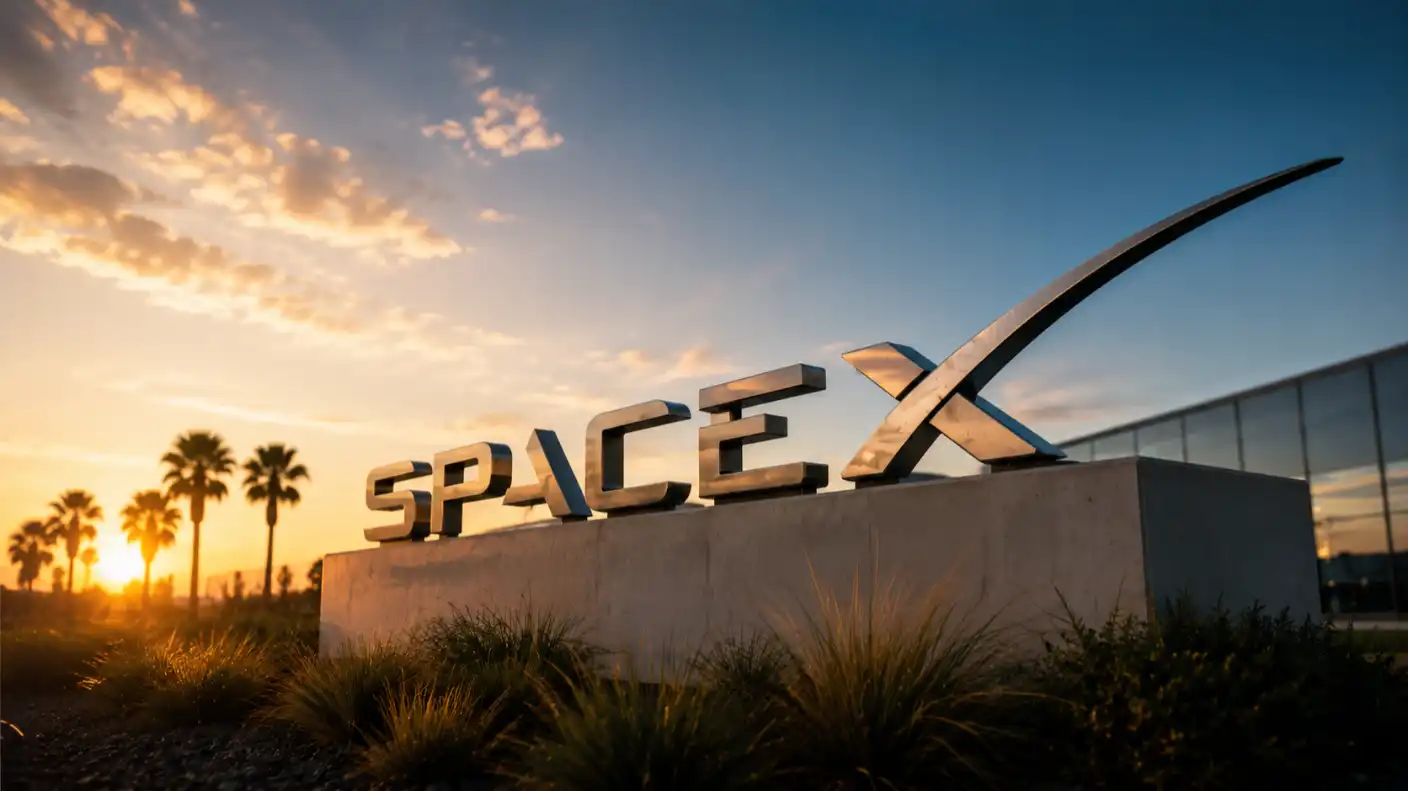
SpaceX officially began trading on the Nasdaq exchange this week, marking one of the most anticipated financial events in the history of the modern stock market. Investors lined up in record numbers to get a piece of Elon Musk’s aerospace conglomerate, which now serves as the primary engine for space exploration, satellite internet, and advanced artificial intelligence infrastructure. This public debut represents a monumental shift for a company that spent years operating behind the private curtain, forced to reveal its complex financial web to the scrutiny of global shareholders.
The sheer scale of the offering reflects the company’s unique position in the global economy. By merging with Musk’s AI startup, xAI, in February, SpaceX entered the public market with a massive valuation that rivals the biggest names in Big Tech. While the company did not disclose the final valuation in its initial press statements, internal estimates suggest the total market capitalization could easily push toward the $1 trillion mark. This puts SpaceX in an elite category alongside established giants like Apple, Microsoft, and Nvidia, signaling that investors now view space-based computing as a pillar of the AI-driven future.
The company’s decision to move forward with the IPO comes as a strategic response to the aggressive spending cycles seen across the tech sector. With global firms expected to pour over $700 billion into AI infrastructure this year, SpaceX needs deep access to capital to maintain its aggressive launch schedule. The company intends to use the proceeds from this offering to build out a satellite constellation numbering up to one million units. This network will provide the low-latency bandwidth needed for “orbital computing,” a technology that Musk believes will solve the land and energy constraints facing data centers on Earth.
Market analysts are paying close attention to the stock’s performance compared to other recent high-profile listings. While companies like Cerebras Systems recently debuted with a market cap of roughly $95 billion, SpaceX enters a completely different league. Historically, only a few companies have managed to maintain a valuation above $100 billion after their first day on a U.S. exchange. The immense demand for this stock suggests that institutional investors are eager to diversify away from traditional cloud providers and move their capital into hardware-focused AI companies that control their own physical infrastructure.
However, the IPO also brings a new level of accountability that the company has never faced before. As a public entity, SpaceX must now report its quarterly earnings with total transparency. Every failed rocket landing, satellite deployment delay, or shift in consumer demand for Starlink internet will impact the share price in real-time. The company’s recent financial filings show that while its connectivity division is wildly profitable, its space and AI divisions are still absorbing billions of dollars in development costs. Shareholders will expect a clear roadmap toward long-term profitability, even as the company continues to take massive risks on experimental technology.
The timing of this launch also comes on the heels of a significant legal drama involving Musk and his former partners at OpenAI. Earlier this week, a California jury ruled against Musk in a lawsuit where he accused OpenAI’s leadership of abandoning their nonprofit mission. While Musk vowed to appeal the decision, the court’s dismissal removed a potential legal cloud over the merger between his AI lab and SpaceX. With this hurdle cleared, the company’s executive team could focus entirely on the logistics of the share sale.
Musk’s track record with public markets adds another layer of intrigue to the debut. The last time he took a company public was in 2010 when Tesla hit the Nasdaq. That offering was managed by a similar team of high-profile banks, and it proved to be one of the most successful tech investments of the last fifteen years. Many of those original Tesla shareholders are now looking for the “next big thing,” and they see SpaceX as the logical successor. They believe that Musk’s ability to execute on long-term hardware goals makes this stock a “must-have” for any growth-oriented portfolio.
Looking forward, the success of this IPO could trigger a broader trend of space-related listings. For decades, space exploration remained the domain of government agencies and a handful of billionaires. Now, with SpaceX acting as a blueprint, other aerospace firms will likely explore the public markets to find the capital needed to compete in the burgeoning “space economy.” If SpaceX manages to maintain its market value after the initial hype fades, it will likely inspire a new wave of capital investment in satellite arrays, orbital manufacturing, and lunar logistics.
For the average retail investor, the SpaceX IPO offers a chance to participate in what Musk describes as the “multi-planetary future.” Yet, this opportunity comes with the reality of investing in a company that frequently deals with the physics of failure. Every launch is an experiment, and every experiment carries the risk of total loss. This fundamental reality remains unchanged, even now that the company is listed on the Nasdaq.
As the stock continues to settle into its trading range, the broader market will be watching the company’s ability to scale. The success of the AI infrastructure division, supported by the steady revenue from Starlink, will determine whether this IPO becomes a long-term winner or just another hype-driven bubble. For Elon Musk, the debut is the culmination of nearly two decades of work, proving that with enough capital and enough grit, the path to the stars can eventually be paved with public investment.