
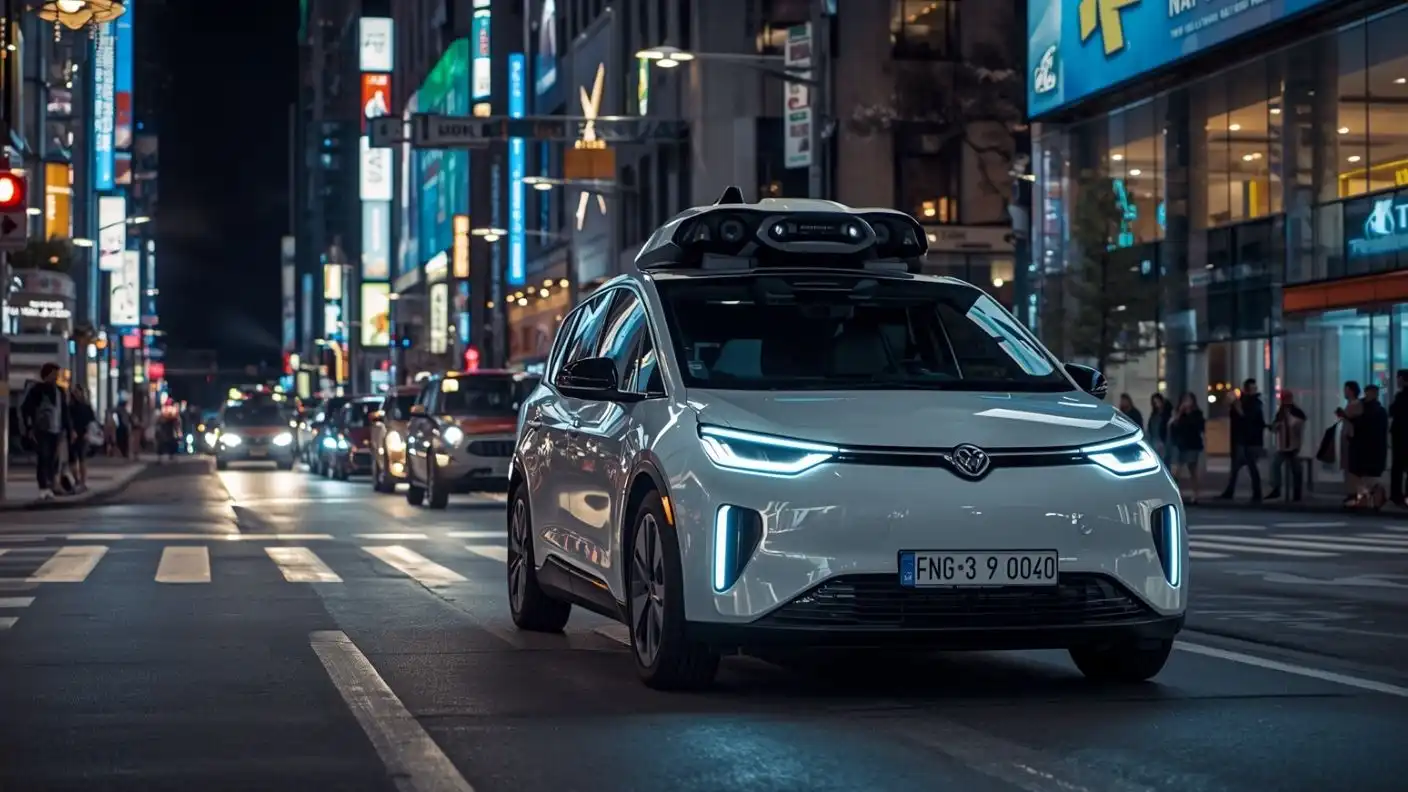
We built the internet on top of millions of miles of physical cables and complex routing switches. For the past twenty years, human engineers sat behind desks, typing out manual commands to keep this global machine running. They balanced traffic loads, patched security holes, and rerouted data when fiber lines snapped. This model worked when the internet felt like a static tool, but it fails in our current reality. Today, we demand constant, flawless connectivity for everything from our smartphones to our autonomous cars. The sheer scale and speed of our data demand an upgrade. We now build “self-driving” networks—systems that use artificial intelligence to manage their own health, security, and performance without needing a human to touch a single switch.
The End of Manual Network Tuning
Think about the sheer complexity of a modern network. It spans thousands of miles, connects millions of devices, and changes its traffic patterns every single millisecond. A human engineer cannot possibly watch all of this traffic. They spend their days chasing shadows, trying to fix a slowdown here or a glitch there. Self-driving networks end this struggle. They use machine learning to observe the entire system at once. They notice when traffic starts to clog a specific gateway. They move the data to a quieter path before the congestion even happens. The network basically tunes itself, constantly seeking the most efficient way to get your information from one side of the world to the other.
The Network as a Living Organism
We used to treat computer networks like fixed pipes in a house. You put the pipe in the wall, and it stayed there until someone broke it. Self-driving networks operate more like a living organism. When a link breaks—perhaps a ship cuts an undersea cable or a storm knocks out a cell tower—the network doesn’t just sit there and wait for a repair crew. It senses the failure instantly and redirects traffic to a healthy path. It adapts its own physical structure to keep the flow of information steady. This resilience creates a digital world where connectivity feels permanent, even when the underlying hardware physically breaks.
Blocking Attacks Before They Strike
Human-led security teams always play a game of catch-up. They wait for a hacker to break into a database, and then they scramble to close the hole. This reactive method gives the criminals a massive, permanent head start. Self-driving networks flip the advantage. They use behavioral analysis to look for the “scent” of an attack. If a device on the network starts acting strangely—perhaps it tries to scan for weaknesses or send data to a suspicious destination—the network identifies it as a threat. It automatically shunts that device into a secure, isolated corner, preventing the virus from spreading to the rest of the web. It treats every threat like an infection that the network must quarantine immediately.
Precision Traffic for Critical Services
Not every data packet deserves the same treatment. An email can wait a few seconds, but a remote surgical robot or an autonomous car moving through a busy city needs an immediate response. Self-driving networks know the difference. They use “network slicing.” They carve out a private, ultra-fast, ultra-reliable lane for high-stakes traffic, while letting the less important data take the standard routes. This allows a surgeon in one region to operate on a patient in another with zero lag. It guarantees that our most important human systems stay connected, no matter how much junk traffic fills the rest of the web.
Democratizing High-Speed Access
We still struggle with a massive global gap in connectivity. Many rural and remote areas remain “offline” because building a manual network in those places costs too much money and requires too many human technicians. Autonomous connectivity changes this math. We can now deploy fleets of low-orbit satellites and self-managing drone relays that build their own network coverage. These systems automatically connect to each other, adjust their signals to cover the local terrain, and manage their own power supplies. We finally have a way to bring high-speed internet to the most isolated corners of the planet without needing a giant, expensive workforce to keep it running.
The Shrinking Energy Footprint
Our current network hardware consumes massive amounts of power because it stays fully “on” all the time, just in case someone needs to send an email. Self-driving networks are inherently lean. They use intelligent power management to put inactive parts of the infrastructure to sleep when traffic is low. They wake up only the hardware they need to handle the current load. This “dynamic scaling” slashes the electricity usage of our global internet backbone. We build a network that respects the planet, using energy only when it actually delivers value.
Reducing Human Error in Configuration
If you ask any senior network engineer what causes the most downtime, they will tell you the same thing: human error. A single mistyped command in a routing table can bring down an entire national grid. Humans get tired, we get distracted, and we make simple mistakes. Automated networks remove this vulnerability. We write “infrastructure as code.” We tell the network the outcome we want, and the autonomous system handles the complex, messy configuration. It never types a wrong command. It never skips a step. It follows the intent of the architect with the tireless, boring perfection that only a machine can offer.
The Ethical Challenge of Automated Control
We must talk about the risks of giving a machine the power to manage our connectivity. What happens if the network decides that a certain type of traffic is “bad” and blocks it based on a faulty bias? Who defines the rules for how the network behaves? We need global standards for “algorithmic transparency.” We must ensure that the rules used by our self-driving networks remain open to audit. We cannot allow these automated systems to become private black boxes that favor one company or one political interest over another. The network must remain neutral, fair, and open to every user.
Conclusion
We built a world where our economy, our safety, and our personal lives depend on the invisible flow of data. Relying on slow, human-managed networks to keep this machine running is a losing battle. Self-driving networks represent the only way to scale our digital world into the next decade. They provide the speed, the security, and the resilience we need to thrive. By handing the daily chores of traffic management and security over to intelligent, autonomous systems, we free our human engineers to build the next generation of global connectivity. The network of the future manages itself, and that is exactly how it should be.