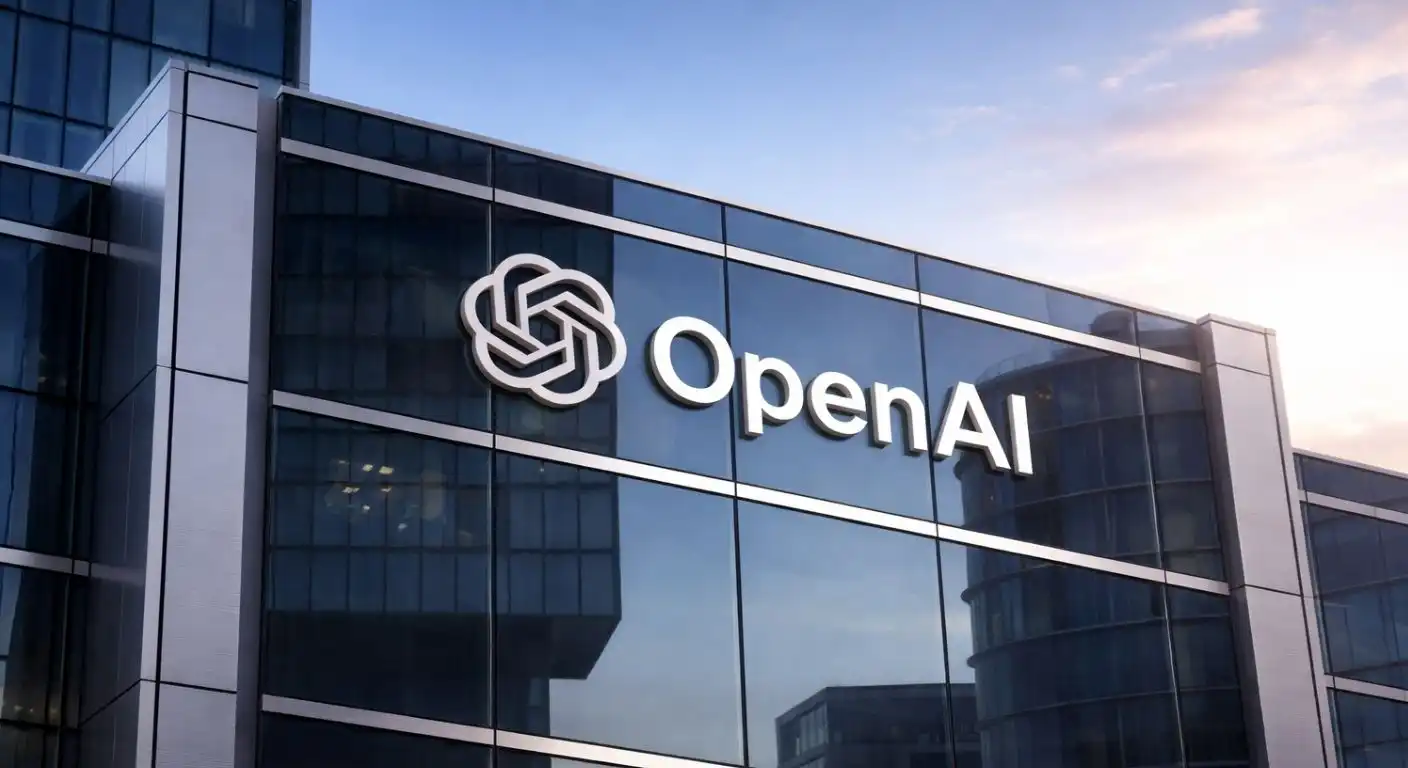
OpenAI is moving closer to its own stock market debut. According to reports from the New York Times, the artificial intelligence giant has been holding serious talks with financial powerhouses like Goldman Sachs and Morgan Stanley. Company insiders suggest that if the stock market remains stable, OpenAI could file its initial public offering paperwork soon, potentially leading to a public listing as early as September of this year.
When asked about these plans, OpenAI offered a standard corporate response. A company spokesperson stated that they regularly evaluate different strategic options as part of normal business governance, while noting their primary focus remains on execution. While the company refuses to confirm a date, the scale of its ambitions is undeniable. With a private valuation of $730 billion, OpenAI would instantly become one of the most valuable companies ever to hit the public markets.
The timing is particularly interesting because the company recently cleared a major legal hurdle. A federal judge and a jury rejected a lawsuit from Elon Musk this week. Musk had argued that the company betrayed its original nonprofit mission when it created a for-profit arm. With that legal threat removed, the path to a public offering looks much smoother. OpenAI now joins a crowded field of AI firms racing to go public, including Anthropic and SpaceX, which also have plans to test the appetite of Wall Street investors in the coming months.
Despite the hype, the company’s internal math looks difficult for any typical investor to digest. In 2024, OpenAI reported $3.7 billion in revenue, but it also suffered a net loss of $5 billion. This massive gap between income and spending is expected to continue for years. CEO Sam Altman has committed to spending a staggering $600 billion on computing infrastructure by 2030. Because building these AI models requires constant upgrades to expensive data centers, analysts predict the company could lose a total of $44 billion by the year 2028.
Optimists argue that this spending is just the price of leadership. They believe the company will finally turn a corner and reach true profitability by 2029 or 2030. However, that is a long time for a startup to bleed cash. Skeptics point out that the company’s massive $730 billion valuation relies heavily on circular investments. For example, giants like Microsoft and Nvidia have poured billions into OpenAI, and then OpenAI uses that money to buy chips and cloud services from those same companies.
This circular investment strategy has drawn plenty of criticism from Wall Street analysts. If Microsoft and Nvidia are providing both the funding and the core technology, the true market value of the company becomes hard to judge. Critics ask what happens if these big tech backers decide to slow down their spending. If the flow of cash from Microsoft or Nvidia dries up, OpenAI would need to find a way to fund its operations through its own software sales alone.
Everything depends on whether consumers and businesses keep paying for AI at the current rate. While revenue has grown quickly, the costs of training “frontier” models are rising even faster. Every time the company improves its software, the next training run often costs 1.5% to 5% more in electricity and hardware than the last one. OpenAI must prove it can turn its expensive code into a sustainable, profit-generating machine before its massive cash reserves run dry.
Investors who buy into this IPO will be betting on a vision of the future that has not yet been proven. If OpenAI hits its goal of hundreds of billions in sales by 2030, the IPO will be remembered as the greatest deal of the century. If the costs of compute continue to spiral and the competition drives prices down, the company might face a very different outcome. September is only a few months away, and Wall Street is ready to see if the world’s most famous AI lab can handle the scrutiny of the public markets.