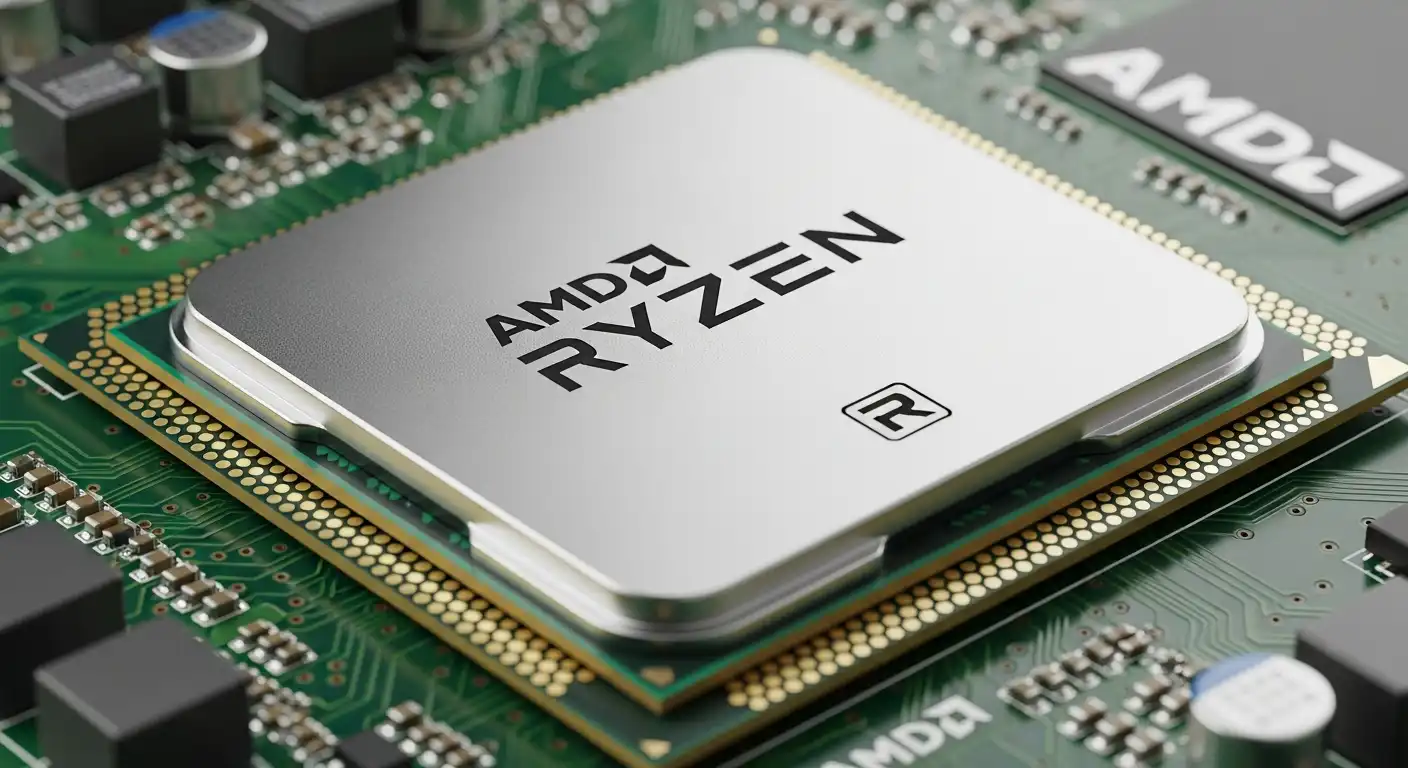
AMD is betting big that developers are tired of paying massive monthly fees for cloud-based artificial intelligence. At this year’s CES, the company introduced the Ryzen AI Halo, a compact, Mac Mini-sized system designed to handle heavy AI workloads locally. Today, AMD finally revealed the pricing and release schedule for this powerful machine. The base model will start at $3,999, powered by the company’s new Ryzen AI Max 300 processors. Pre-orders are set to open in June, with an even faster version featuring the Ryzen AI Max 400 chips arriving in the third quarter of 2026.
While a $3,999 price tag sounds high, AMD argues that the Halo is a bargain compared to cloud computing costs. Many developers currently spend $773 every single month to process 6 million daily AI tokens on remote servers. For these professionals, the Halo could pay for itself in just six months. For even more demanding users who spend $2,253 per month to process 18 million daily tokens, AMD claims their $4,000 Radeon R9700 Pro GPU version will break even in just three months. This strategy turns a hardware expense into a long-term cost-saving measure.
These machines are definitely not for the average person looking to browse the web or check email. Instead, AMD is directly targeting Nvidia’s DGX Spark AI PC, which currently sells for $4,699. Nvidia’s offering only runs the Linux operating system, which limits its flexibility for some developers. The Ryzen AI Halo offers a wider range of options because it uses an x64 chip, allowing it to run either Windows or Linux. This flexibility gives AMD a significant edge in office environments where Windows software is the standard.
The hardware specifications for the Halo are designed to handle massive AI models that would normally choke a standard desktop computer. The system comes equipped with 128GB of unified system memory. This massive amount of RAM is vital for loading complex language models. Interestingly, this provides more memory than you can currently get in an Apple Mac Mini or a Mac Studio, both of which have been popular choices for AI developers up until now.
The Halo system also boasts an NPU capable of 50 TOPS, which measures its ability to perform trillions of operations per second. It pairs this with a Radeon GPU that features 40 compute units. By balancing the workload between the NPU and the GPU, the machine can tackle AI tasks without relying solely on a single source of power. In contrast, the competing Nvidia DGX Spark depends entirely on Nvidia’s Blackwell GPU architecture, giving AMD a different approach to balancing power and efficiency.
Later this year, AMD will introduce an even more powerful lineup with the Ryzen AI Max 400 series. The flagship chip in this new family, the AI Max+ Pro 495, will feature 16 cores and boost speeds hitting 5.2 GHz. This chip also upgrades the NPU to 55 TOPS and features the newer Radeon 8065S graphics engine. Perhaps most importantly for heavy AI users, these new chips will support up to 192GB of unified memory. This capacity allows for 160GB of dedicated GPU video RAM, a massive advantage when working with the largest artificial intelligence models currently in development.
The AI industry is growing so fast that companies are investing over $1 billion into specialized hardware every few months to keep up. By offering a local, hardware-based alternative to the cloud, AMD is trying to capitalize on the frustration developers feel regarding rising subscription fees and privacy concerns. Keeping data on a local machine rather than sending it to a server is a huge advantage for companies working on sensitive projects.
While these machines offer impressive specs, independent testing will be the real judge of their value. We still need to see benchmark scores to compare the Max 400 chips against the existing 300 series. As we move into the third quarter of 2026, the battle for the desktop AI market will heat up significantly. AMD is counting on its blend of high memory capacity, x64 software compatibility, and lower long-term costs to convince developers that the future of AI is not in the cloud, but right on their own desks.