
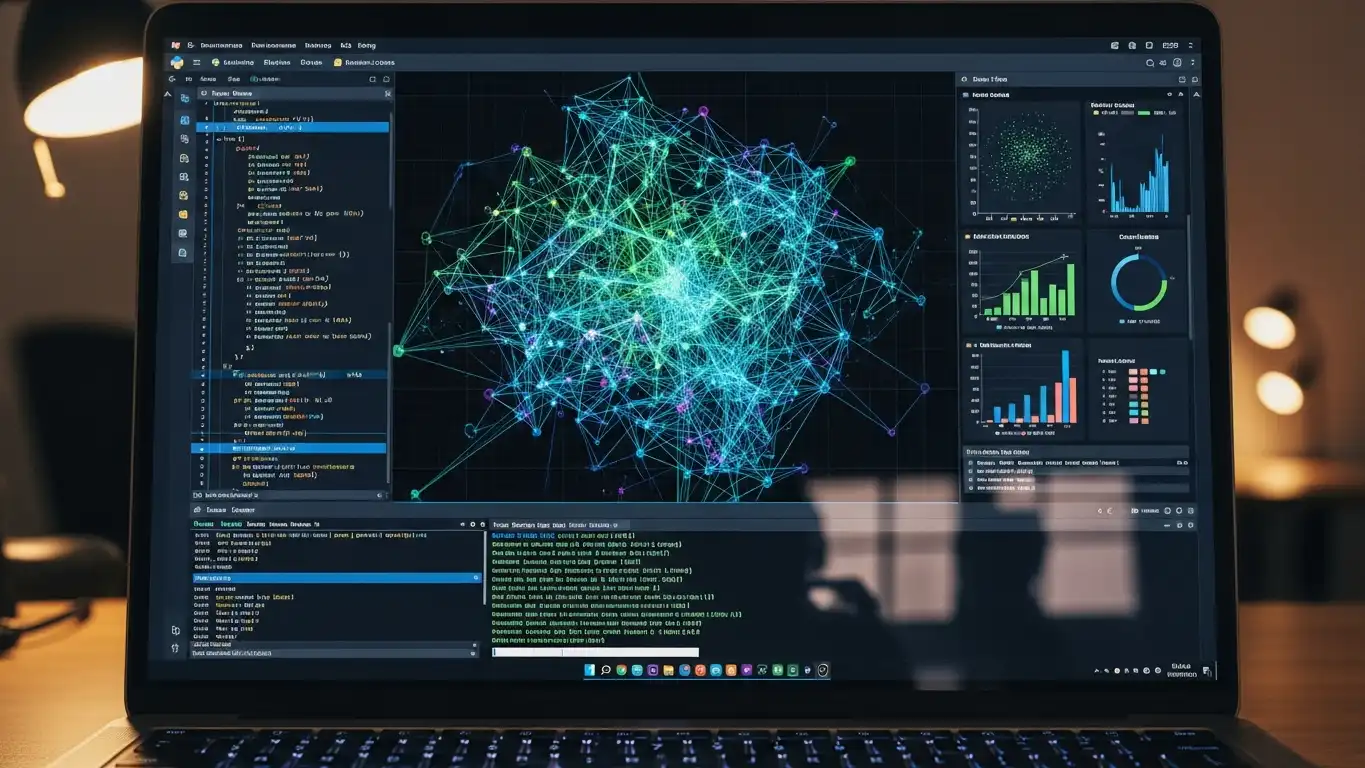
We spent the last few years treating machine learning like a magical science experiment. A team of brilliant data scientists would hole up in a dark room, polish a model for months, and finally toss it over the wall to the software engineers. This old process felt messy, slow, and expensive. It worked when we built one or two models for fun, but it fails completely today. We now deploy thousands of models across global supply chains, medical clinics, and financial networks. The “experimental” phase of AI has ended. We enter the decade of Machine Learning Operations, or MLOps. This discipline turns the magic trick into a reliable, predictable factory line.
The Death of the “It Works on My Laptop” Excuse
Every software engineer knows the pain of a program that runs perfectly on a local computer but crashes the moment it touches the live network. This problem hurts machine learning even more. A model often requires specific data formats, precise library versions, and huge amounts of computing power. If you don’t track these variables perfectly, the model produces junk results. In the coming years, MLOps will solve this by enforcing strict standards from the very first line of code. We will build “reproducible pipelines” where every single change to the model or the data gets logged, tested, and validated. If a model fails in production, the system will instantly show us exactly what changed, allowing us to fix it in seconds rather than days.
Automating the Boring Cleanup
Data scientists currently spend eighty percent of their day doing mind-numbing chores. They clean messy spreadsheets, label images, and fix broken data pipelines. This represents a massive waste of human brainpower. The next decade brings “automated data engineering.” We will use smart systems to automatically detect when our data sources change, to flag broken values, and to reformat inputs on the fly. By handing these boring tasks to the pipeline, we free up our best thinkers to solve actual business problems. We stop treating our top-tier experts like digital janitors and let them act like true architects.
Training Models Without Human Supervision
We currently use humans to manually guide the training of every single model. This acts as the biggest bottleneck in the entire industry. How do we build an AI that can manage a global network of a million smart sensors if we have to touch the code every time the environment changes? The answer lies in “continuous training.” We build pipelines that watch the live performance of a model. If the model starts losing accuracy because the real-world data shifted, the pipeline automatically pulls in the newest data, retrains the model, and deploys the update. The machine teaches itself to stay smart, without needing a human to supervise the process 24/7.
Moving Intelligence to the Very Edge
Sending huge amounts of data back to a central cloud server creates delay and eats up massive amounts of expensive bandwidth. This will not work for autonomous cars or real-time medical surgery. The next decade belongs to “edge-MLOps.” We will push the training and the deployment of models out to the absolute edge of the network. We will run intelligence right on the camera, the sensor, or the local medical device. Managing these distributed models requires a new kind of operations platform. We need systems that can push an update to a million individual devices across the world, verify the security of the update, and handle a million different local environments simultaneously.
Transparency and the Law of Explainability
Global regulators have finally stopped watching from the sidelines. They now demand to know exactly how a machine learning model makes its decisions. If an automated system denies your loan or flags your account for fraud, you have a legal right to an explanation. MLOps will provide this truth. Every model will carry an “audit log” that explains the path from the raw data to the final decision. We will move away from the “black box” era. We will build tools that translate complex probability into simple human language, proving to regulators and users that our systems make decisions based on logic, not on hidden bias.
Security for the Intelligent Factory
An AI model acts as a giant, soft target for global cybercriminals. Hackers now realize they don’t need to break your firewall if they can just “poison” the data you use to train your model. By feeding your system bad information, they can force the AI to make errors on purpose. This “adversarial attack” creates a new, terrifying security risk. Our future MLOps pipelines must prioritize security above all else. We will build “robustness testing” directly into the pipeline. Before we let a new model talk to our customers, it must pass a battery of attacks designed to break its logic and reveal its weaknesses.
The Human-in-the-Loop Safeguard
We cannot hand the keys over to the machine and walk away. Even the most perfect pipeline requires a final safety check. MLOps will formalize the role of the “human-in-the-loop.” When the pipeline detects a high-stakes decision—like a medical diagnosis or a legal judgment—it will automatically pause. It will ask for a human review. This keeps the expert in charge, using the AI to gather the facts, but relying on human empathy and judgment to make the final call. We will build systems that know their own limits and scream for help when the situation exceeds their ability.
Scaling to a Global Business Perspective
Building one great model for one local problem is easy. Managing ten thousand models that support a global retail chain is an incredible technical challenge. The future of MLOps is about scale. We will build “Model Factories” where we manage the entire lifecycle of thousands of intelligent agents. We will use global dashboards that show us the health, the cost, and the performance of every single model in our fleet. We will stop treating AI like a fragile science project and start treating it like a standard utility, just like the power or the water that keeps a business running.
Conclusion
The era of the “hand-crafted” machine learning model has ended. We now enter the age of industrial-scale AI. By building robust, automated, and secure MLOps pipelines, we move beyond the experimental phase and create systems that can reliably power our entire global economy. This shift takes the burden off the tired data scientist and places it on a reliable, automated foundation. If we manage this transition with care—focusing on data quality, security, and human oversight—we will build a digital world that is faster, smarter, and significantly more reliable than anything we currently know.