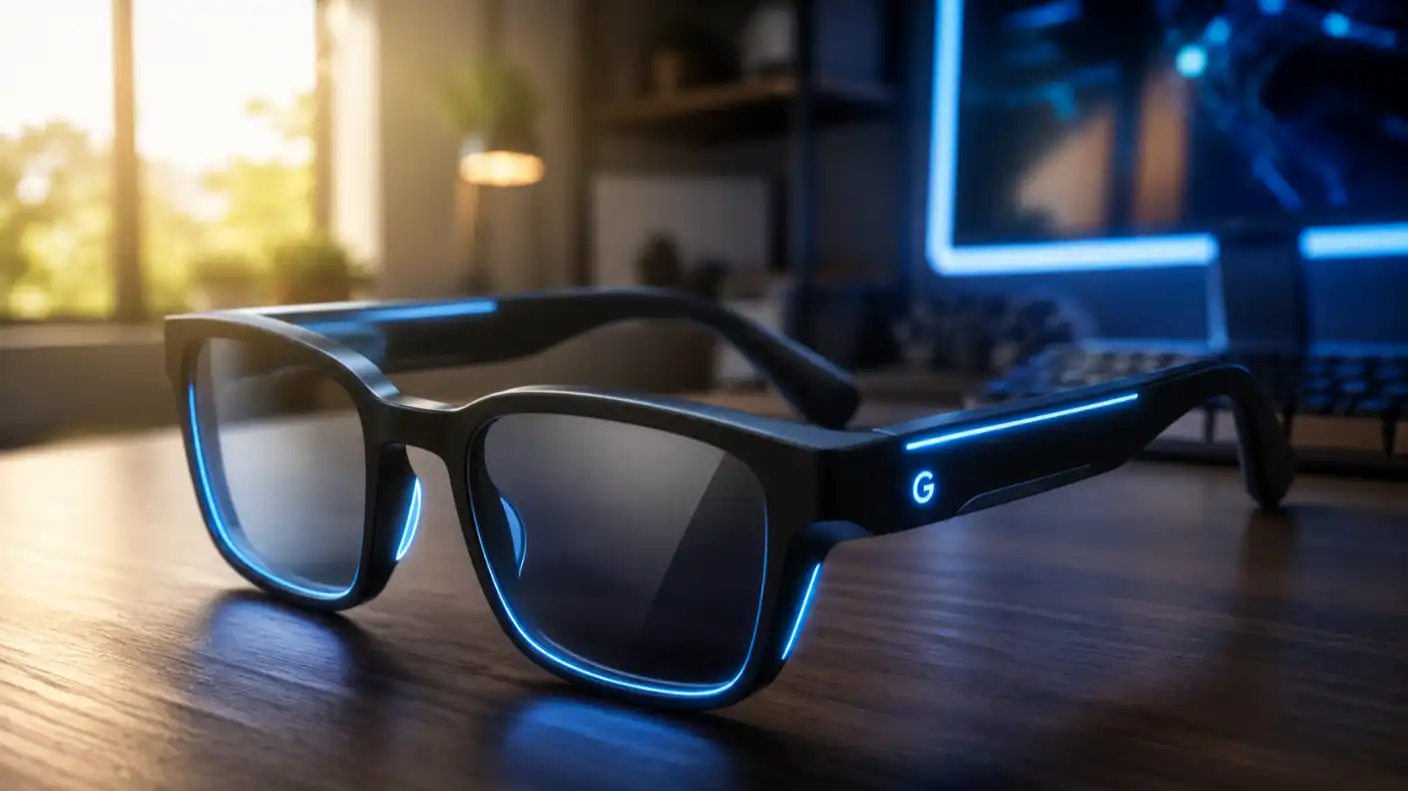
Google officially entered the smart eyewear race this week. During its annual I/O developer conference, the company gave the public a first look at its new audio-focused smart glasses. Google designed these frames to whisper information directly into your ear rather than forcing you to look at a display. This move marks a major shift in how the tech giant approaches the wearables market, directly challenging Meta, which has already found significant success with its own AI-powered eyewear.
The project relies on strong partnerships. Google teamed up with Samsung and famous eyewear brands Gentle Monster and Warby Parker to build the hardware. These glasses will carry the Gemini artificial intelligence assistant inside the frames. Google confirmed the glasses work seamlessly with both Android and iOS devices and promised they will hit store shelves later this fall. Shahram Izadi, the head of Android XR products, told the crowd that these first two designs are just the beginning of a much larger collection.
Google sees these glasses as a vital part of its broader artificial intelligence push. During the same I/O event, the company announced a massive wave of new AI models and autonomous “agents” meant to handle tasks for users. The smart glasses serve as a physical bridge, allowing Gemini to hear what you hear and see what you see. By collecting this unique audio and visual data, Google can train its models to be more helpful and context-aware than a standard smartphone ever could be.
The company clearly feels pressure to prove it can still build popular hardware. The future of wearables remains a bit of a gamble, and investors have spent months waiting for a device that finally makes sense in the AI era. Google hopes these audio-only glasses are the answer. They provide a hands-free way to interact with Gemini without the complexity of a bulky headset or the distraction of a screen in front of your eyes.
Meta has already proven that people want this kind of technology. Its partnership with EssilorLuxottica produced a popular line of smart glasses under the Ray-Ban and Oakley brands. Meta’s efforts have been a bright spot for a company that usually spends over $1 billion every single quarter on its “Reality Labs” division. Fans bought 7 million units of the Meta-powered glasses in 2025 alone, proving there is a real appetite for AI that lives on your face rather than in your pocket.
At the conference, Product Manager Nishtha Bhatia gave a live demo to show what the glasses can do. She wore the sunglasses on stage and used voice commands to launch Gemini, connect to her DoorDash account, and order a cup of coffee. She even asked the AI to read a quick summary of her unread text messages and add a new event to her calendar. The glasses provide turn-by-turn navigation by speaking directions into your ear, so you never have to pull out a phone while walking down a busy street.
One of the most fun—if slightly strange—features involves the camera. The glasses can take photos and use a new image generation tool called “Nano Banana.” Users can simply say, “Hey Google, take a picture and put everyone in funny hats.” The AI will snap the shot and then use its generation models to edit the image instantly. This shows how Google wants to make AI feel more like a creative toy and less like a serious piece of office software.
Of course, a device that sees and hears everything brings up big privacy questions. Google remained quiet about its exact privacy terms during the reveal. This is a common strategy for tech companies, as they often wait for the product to become popular before addressing how they handle the massive influx of personal data. Since user data is the primary source of value for any AI company, the way Google manages this information will likely become a major point of debate among privacy advocates.
Google isn’t the only giant watching this space. Rumors suggest that Apple is currently designing several frame styles and camera systems for its own smart glasses. Other competitors like Snap and Alibaba are also moving fast to build their own AI-enabled eyewear. The race to define what we wear on our faces is heating up, and by the end of 2026, the market will likely be flooded with options. For now, Google is betting that its partnership with eyewear fashion brands will give it the style and substance needed to finally beat Meta at its own game.