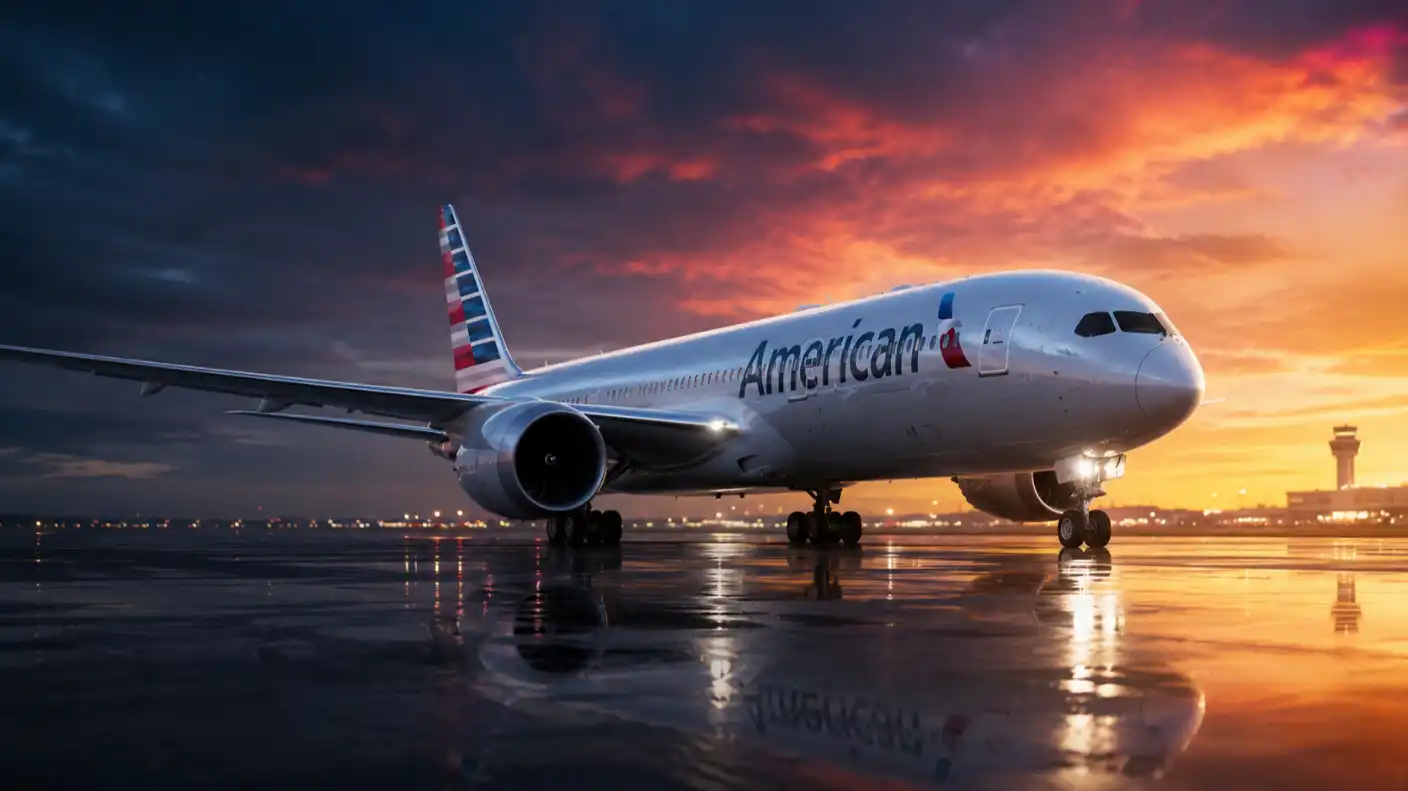
American Airlines just announced a landmark partnership that promises to change the way passengers experience in-flight internet. The major U.S. carrier has officially signed a deal to equip its entire mainline fleet with SpaceX’s Starlink satellite internet service. This collaboration aims to provide gate-to-gate connectivity, meaning travelers can enjoy high-speed, reliable Wi-Fi from the moment they board the aircraft until they land at their destination.
For decades, airline Wi-Fi has suffered from a reputation for being slow, expensive, and unreliable. Many travelers find that traditional air-to-ground connections struggle to support basic tasks like checking emails or sending instant messages. By switching to Starlink, American Airlines intends to offer a fiber-like experience at 35,000 feet. Starlink’s massive constellation of low-Earth orbit satellites provides a level of bandwidth that traditional terrestrial towers simply cannot match, especially when planes fly over remote areas or deep oceans.
The sheer scale of this deployment is massive. American Airlines operates hundreds of aircraft that carry millions of passengers every single year. Integrating Starlink technology across such a large fleet requires significant logistical effort and a long-term capital commitment. While neither company disclosed the exact financial terms of the contract, industry experts estimate that a project of this magnitude represents an investment well over $1 billion. This includes the cost of specialized satellite antennas, custom cabin wiring, and the ongoing service fees required to maintain the high-speed connection.
Connectivity has become the most requested amenity for business travelers in 2026. Companies that rely on constant communication and real-time data access now choose their airlines based on Wi-Fi quality. For American Airlines, this partnership is more than just an added perk; it is a defensive strategy to retain high-value corporate clients. The airline hopes that by offering a superior digital experience, it can boost passenger satisfaction scores by 1.5% or more, which directly impacts customer loyalty and repeat booking rates.
SpaceX continues to dominate the satellite internet sector by leveraging its reusable rocket technology to launch more hardware at lower costs. By putting thousands of small satellites into low-Earth orbit, Starlink bypasses the latency issues that plague older satellite providers. This speed advantage makes the service ideal for video conferencing, live streaming, and gaming—activities that previously felt impossible on long-haul flights.
The passenger experience will be completely seamless. American Airlines plans to automate the connection process so that travelers can join the network without fiddling with complex sign-in portals or separate login credentials. Once the plane pushes back from the gate, the satellite link will activate, allowing passengers to work, watch movies, or stay in touch with friends instantly. This “gate-to-gate” connectivity solves the annoying gap where passengers were previously left offline during the taxi and takeoff phases of the journey.
Safety and security remain central to this rollout. Modern aircraft systems require constant data links for weather monitoring and maintenance, and Starlink’s robust encryption helps protect both passenger traffic and operational data from unauthorized access. The airline is working closely with the Federal Aviation Administration to ensure that the new equipment meets all necessary safety standards before it enters service. Each aircraft will undergo a rigorous certification process to confirm that the satellite hardware does not interfere with the plane’s critical avionics.
Looking ahead, this partnership highlights a broader trend in the travel industry. As digital life becomes integrated into every aspect of our daily routines, passengers have begun to view reliable internet as a basic utility rather than a luxury. By betting on SpaceX, American Airlines is setting a new industry standard that other carriers will soon be forced to follow. As connectivity becomes the new “must-have” feature, the gap between airlines that have fast Wi-Fi and those that do not will only grow wider.
The deployment of Starlink antennas is expected to begin later this year, with a goal of having a significant portion of the fleet connected by early 2027. This rollout will occur in phases, prioritizing the long-haul routes where passengers spend the most time in the air. For frequent flyers, the days of suffering through slow, pixelated connection speeds are finally numbered. American Airlines is clearly betting that high-speed internet will be the key to winning the skies in the coming decade.