We currently live in a world of “dumb” smart devices. Your phone is a genius, and your car is clever, but they barely speak to each other. You have to be the middleman. You check the traffic app, then you start the car, then you text your boss that you are late. This is inefficient. We are entering a new era where these separate islands of technology will merge into one giant continent. In the age of autonomous systems, the software won’t just run on a device; it will live in the space between them, creating a web that handles life’s messy details for us.
The End of the App Silo
Right now, we juggle dozens of apps to get through the day. In the future, we won’t open apps; we will just set goals. An intelligent ecosystem means your calendar talks directly to your self-driving car. The car knows you have a meeting at 9:00 AM. It checks the weather sensors across the city and sees it is raining. It calculates the traffic delay, wakes you up fifteen minutes earlier, and pre-heats the cabin. You didn’t touch a single screen. The software layers worked together to solve a problem you didn’t even know you had.
Cities That Flow Like Water
Traffic lights today operate on simple timers or basic sensors. They are rigid. An intelligent software ecosystem will turn a city into a living organism. When a fire truck needs to get through town, the city’s central system will speak to every traffic light and every autonomous car on the route. The lights will turn green, and the cars will automatically slide to the side to clear a path. Garbage trucks will only visit bins that sensors say are full. The city will manage its own flow, reducing waste and waiting times without a human traffic controller in sight.
The Supply Chain That Thinks
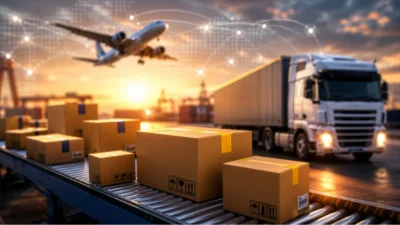
We saw how fragile shipping can be when stores run out of toilet paper or chips. Intelligent ecosystems will fix this. Imagine a warehouse where the shelves count their own stock. When supplies get low, the shelf software orders more. A factory automatically spins up production, and a self-driving truck is dispatched to pick it up. The entire chain, from raw material to your doorstep, negotiates with itself. If a storm hits a shipping route, the system automatically reroutes the boat. It reacts faster than any human manager could.
Software That Fixes Itself
Today, when a server crashes or a robot breaks, a human has to run in with a wrench or a keyboard. This won’t work when we have billions of devices. We will see the rise of “digital immune systems.” If a delivery drone detects a loose rotor, it won’t just crash. It will signal the nearest maintenance hub, land safely, and a repair bot will swap the part. Software bugs will be caught by other software that constantly hunts for errors. The system heals itself, keeping the lights on while we sleep.
Your Personal Digital Agent
You will stop fighting with customer service bots. Instead, you will have your own AI agent that lives in this ecosystem. If your flight is canceled, you won’t wait on hold for three hours. Your software agent will instantly talk to the airline’s software, find a new route, book a hotel, and update your family. It negotiates on your behalf. This levels the playing field. It gives normal people the kind of executive assistance that used to be reserved for CEOs.
Security Must Come First
Connecting everything carries a massive risk. If one domino falls, they all could. A hacker getting into your toaster shouldn’t be able to unlock your car. The most important part of this future is building walls inside the ecosystem. We need systems that trust no one by default. Every time a device asks for access, it must prove it is safe. We will likely see a move toward “blockchain” style security, where the record of what happened cannot be faked. Safety cannot be an afterthought; it must be the foundation.
Conclusion
The age of autonomous systems is not just about robots replacing workers. It is about removing the friction from our lives. We are building a world where the boring, repetitive logistics of being alive—scheduling, commuting, buying, fixing—are handled by a silent, invisible network. This leaves us with the one thing technology can’t create: more time. The software handles the survival, so we can focus on the living.