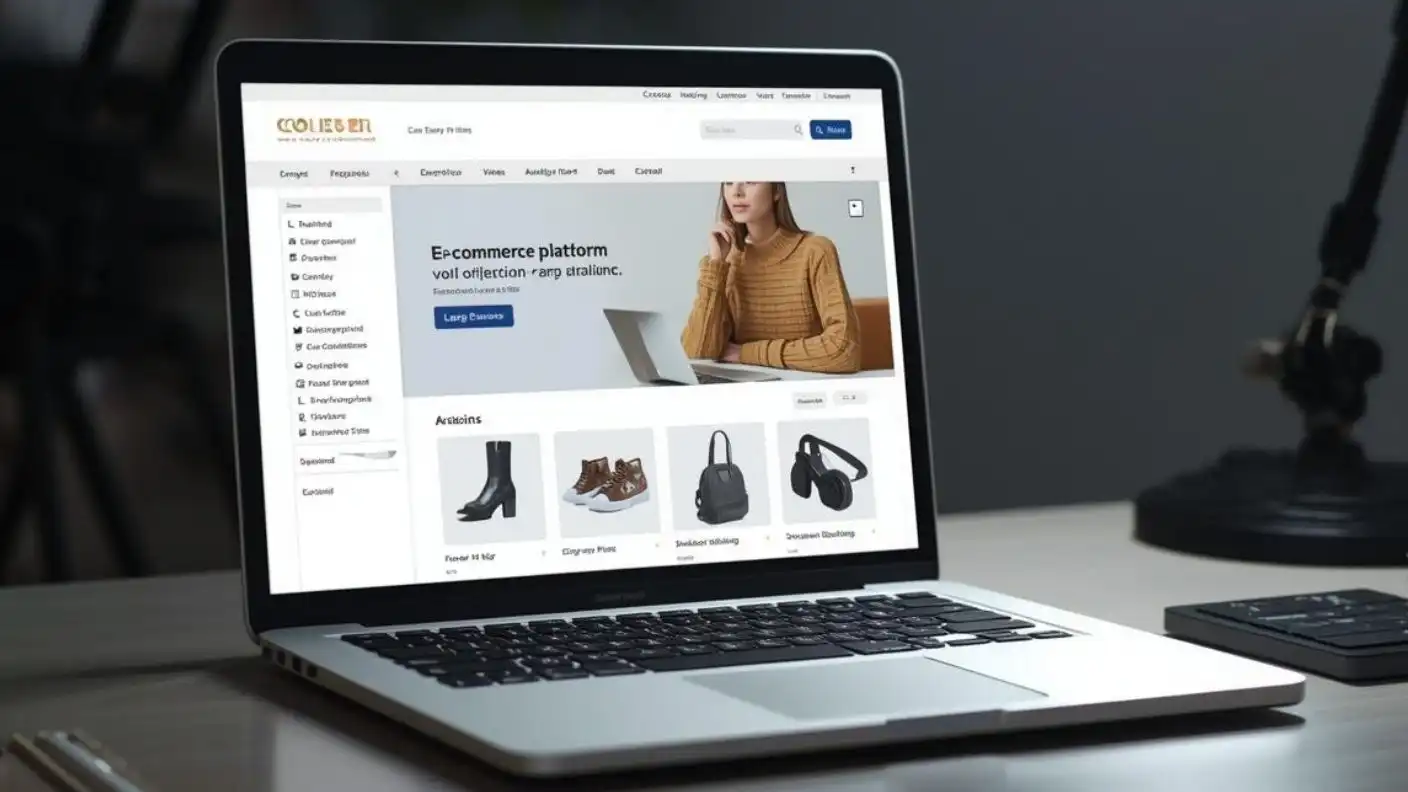
In the grand, sweeping narrative of the digital revolution, few transformations have been as profound, as pervasive, and as deeply personal as the way we shop. The traditional world of retail—a world of brick-and-mortar stores, of physical shelves, and of geographic constraints—has been completely and irrevocably reinvented by the rise of the internet. At the very heart of this multi-trillion dollar global revolution, acting as the digital foundation, the operational engine, and the customer-facing storefront, lies a powerful and ever-evolving category of software: the e-commerce platform.
The journey of the e-commerce platform has been a remarkable story of evolution, a multi-decade quest to make the act of buying and selling online easier, faster, more intelligent, and more engaging. It is a story that has seen us move from the clunky, custom-coded “shopping carts” of the early web to the sophisticated, all-in-one, cloud-based “commerce operating systems” of today. This is not just a story about a new category of software; it is a story of a fundamental shift in the very nature of commerce itself. The modern e-commerce platform is no longer just a tool for processing transactions; it is a strategic, data-driven, and deeply integrated command center for the entire customer journey, a “sentient storefront” that is as much about creating experiences as it is about selling products.
Act I: The Age of the Monolith – The “On-Premise” Beginnings
The first act in the story of e-commerce software, which took place in the late 1990s and early 2000s, was a world that was a direct reflection of the broader enterprise software landscape of the time.
This was the era of the on-premise, monolithic e-commerce platform.
The Characteristics of the First Generation
These early platforms were powerful but also incredibly complex, expensive, and rigid.
- The On-Premise Model: Like all enterprise software of the era, these platforms were sold as a perpetual software license that a business had to install, to run, and to maintain on its own physical servers, in its own data centers.
- The Monolithic Architecture: The software was built as a single, massive, tightly-coupled application. The front-end “storefront,” the back-end product catalog, the order management system, and all the other functions were all part of one, giant, indivisible codebase.
- The “Heavyweight” Players: This market was dominated by large, enterprise-focused vendors like IBM (with its WebSphere Commerce), Oracle (with ATG), and SAP (with Hybris). For smaller businesses, the only option was to build a custom solution from scratch or to use a simpler, open-source “shopping cart” script.
The Crippling Limitations of the Old Guard
While these platforms enabled the first wave of e-commerce, they were also a massive bottleneck to the agility and the innovation that the new, fast-moving world of online retail demanded.
- The Prohibitive Cost and Complexity: The total cost of ownership (TCO) for one of these on-premise platforms was astronomical. It included not just the massive upfront license fee, but also the cost of the server hardware, the data center, and the large, specialized team of IT professionals required to implement, to customize, and to maintain the system. This put it completely out of reach for all but the largest enterprise retailers.
- A Glacial Pace of Innovation: The upgrade cycle for these platforms was painfully slow. A major new version might be released only every few years, and the process of upgrading was a massive, high-risk project. This meant that retailers were often stuck on old, outdated technology and could not take advantage of the latest innovations in web and mobile commerce.
- The Rigidity and the “Vendor Lock-in”: These were closed, proprietary “walled gardens.” Customizing the platform to meet the unique needs of a business was incredibly difficult and expensive, and it made the future upgrades even more painful.
Act II: The SaaS Revolution and the Democratization of Commerce
The second, and most transformative, act in the story was the SaaS (Software as a Service) revolution. A new and far more powerful and accessible paradigm emerged, one that completely democratized the ability to sell online.
This new generation of cloud-based, multi-tenant e-commerce platforms broke down all the old barriers to entry and unleashed a Cambrian explosion of entrepreneurship.
The Rise of the “All-in-One” SaaS Platform
The new model was a complete inversion of the old, on-premise one.
- The SaaS Model: Instead of a massive upfront cost, a merchant could now pay a simple, predictable monthly subscription fee to access a powerful, enterprise-grade e-commerce platform. The SaaS vendor took on the entire, massive burden of hosting, securing, maintaining, and continuously updating the software.
- The “All-in-One” Philosophy: These platforms were designed to be an “all-in-one” solution, a single, integrated platform that provided a small business with all the tools it needed to get started, right out of the box. This included not just the online storefront and the shopping cart, but also the inventory management, the payment processing, the shipping integrations, and even the marketing tools.
The Titans of the SaaS E-commerce World
This revolution was led by a new generation of visionary companies that have now become the undisputed titans of the modern e-commerce landscape.
- Shopify: The Champion of the Entrepreneur: Shopify is the standard-bearer of this movement. It has built a massive, global empire on its singular and relentless focus on making it as simple as possible for anyone, from a solo entrepreneur in their bedroom to a fast-growing, direct-to-consumer (DTC) brand, to start, to run, and to grow a business. Its user-friendly interface, its massive app ecosystem, and its powerful “all-in-one” value proposition have made it the de facto operating system for a huge portion of the modern e-commerce world.
- BigCommerce: The “Open SaaS” Challenger: BigCommerce is Shopify’s main competitor in the SaaS space. It has positioned itself as the “open SaaS” platform, with a stronger focus on the needs of the mid-market and the enterprise. It emphasizes its more open, API-first architecture, which gives larger, more technically sophisticated merchants a greater degree of flexibility and the ability to integrate the platform more deeply with their existing back-end systems.
- The Open-Source Contenders (WooCommerce and Magento): While the SaaS platforms have become dominant, a powerful open-source ecosystem also exists.
- WooCommerce: This is not a standalone platform, but a free, open-source plugin that turns the world’s most popular content management system, WordPress, into a fully functional e-commerce store. Its deep integration with the massive WordPress ecosystem of themes and plugins has made it an incredibly popular choice, particularly for content-rich businesses.
- Magento (now Adobe Commerce): Magento has long been the leading open-source platform for larger, more complex, enterprise-grade e-commerce sites. It is known for its immense power and its limitless customizability, but it also has a notoriously steep learning curve and a high cost of ownership. Since its acquisition by Adobe, it has become a key part of the broader “Adobe Experience Cloud.”
Act III: The Age of “Composable Commerce” – The “Unbundling” of the Monolith
We are now entering the third, and most sophisticated, act in the story: the age of “composable commerce.” While the “all-in-one” SaaS platforms have been a massive leap forward, their monolithic, “one-size-fits-all” nature can still be a constraint for the largest and most ambitious enterprise retailers who demand the ultimate level of flexibility and control.
Composable commerce is a modern, “best-of-breed” architectural approach that is a direct response to the limitations of the “all-in-one” monolith. It is the e-commerce equivalent of the microservices and the API-first revolution that has swept through the rest of the software world.
The “MACH” Architecture: The Blueprint for Composability
The philosophy of composable commerce is often defined by the acronym MACH.
- M – Microservices: The core principle is to break down the massive, monolithic e-commerce platform into a collection of smaller, independent, and loosely coupled “packaged business capabilities” (PBCs). There is a separate microservice for the product catalog, for the shopping cart, for the promotions engine, for the search function, etc.
- A – API-First: All of these different microservices communicate with each other, and with the front-end, through a rich and comprehensive set of APIs.
- C – Cloud-Native: The entire architecture is built to run on the modern, scalable, and resilient infrastructure of the public cloud.
- H – Headless: This is the most critical and defining concept. In a “headless” architecture, the front-end “presentation layer” (the “head,” which is the actual, customer-facing website or the mobile app) is completely decoupled from the back-end e-commerce engine and its business logic.
The “Headless Commerce” Revolution
The “headless” approach is a fundamental and powerful paradigm shift.
- How it Works: The back-end e-commerce platform (from a vendor like commercetools or VTEX) does not have a built-in “storefront.” It is a pure, “headless” engine that exposes all of its functionality—the products, the cart, the checkout—through a set of APIs. The brand is then free to build any kind of front-end experience it wants, using any technology it wants (like a modern, front-end JavaScript framework or a content management system), and that front-end simply “talks” to the headless back-end via its APIs.
- The Transformative Benefits of Headless:
- The Freedom to Create a Unique Customer Experience: This is the biggest advantage. A brand is no longer constrained by the rigid, “cookie-cutter” templates of a monolithic SaaS platform. They have a complete creative freedom to build a unique, content-rich, and highly differentiated front-end experience that truly reflects their brand.
- The Omnichannel Imperative: The headless model is the ultimate enabler of an omnichannel strategy. A single, headless e-commerce back-end can be the “engine” that powers a huge range of different front-end “heads” simultaneously: the main e-commerce website, the mobile app, a “buy” button on a social media post, a smart mirror in a physical store, or even a voice-activated shopping experience through a smart speaker.
- Unmatched Performance and Speed: By decoupling the front-end, a brand can build a much faster and more performant “storefront” using modern front-end technologies like the “JAMstack” (JavaScript, APIs, and Markup). In a world where every millisecond of page load time can impact the conversion rate, this is a massive advantage.
- The Key Players in the “MACH” Alliance: This new, composable commerce movement is being championed by a group of vendors who have formed the “MACH Alliance.” This includes the leading headless commerce platform vendors like commercetools, VTEX, and BigCommerce (which now offers a headless option), as well as the Content Management System (CMS) vendors (like Contentful) and the front-end framework providers.
The Modern E-commerce Platform Stack: The Key Components of the Digital Storefront
A modern e-commerce operation is not just a single piece of software. It is a complex and interconnected stack of different technologies, all working together to power the end-to-end customer journey.
The Core Commerce Engine
This is the foundational platform that we have been discussing, whether it is an “all-in-one” SaaS platform or a “headless” back-end.
It is the system of record for the core commerce entities.
- Product Information Management (PIM): The central repository for all the product data—the descriptions, the images, the prices, the SKUs.
- Inventory and Order Management (IMS/OMS): The system that tracks the inventory levels across all the different warehouses and that manages the entire lifecycle of a customer’s order, from the initial placement to the final fulfillment.
- The Shopping Cart and the Checkout: The core, transactional engine of the store.
- The Promotions Engine: The logic for managing discounts, coupons, and other promotional offers.
The “Experience” Layer
This is the layer that is focused on creating a rich, personalized, and engaging customer experience.
- The Content Management System (CMS): The CMS is the tool that is used to create and to manage all of the non-product, “experiential” content on the site, such as the homepage, the landing pages, the blog, and other marketing content. In a “headless” world, a “headless CMS” like Contentful or Sanity is a critical component of the stack.
- The Search and Merchandising Engine: On a large e-commerce site, the on-site search function is a mission-critical tool. A modern, AI-powered search engine (from a vendor like Algolia or Bloomreach) can provide a much more intelligent, personalized, and “semantic” search experience than the basic, out-of-the-box search that comes with most platforms.
- The Personalization and Recommendation Engine: This is a key, AI-powered layer. These engines analyze a user’s browsing history, their past purchases, and the behavior of similar users to provide a highly personalized set of product recommendations (“customers who bought this also bought…”).
The Marketing and Retention Layer
This is the set of tools that are used to drive traffic to the site and to build a long-term relationship with the customer.
- The Email and Marketing Automation Platform: This is a critical tool for nurturing leads, for recovering “abandoned carts,” and for sending targeted, post-purchase follow-up campaigns.
- The Reviews and User-Generated Content (UGC) Platform: The social proof that is provided by customer reviews and ratings is one of the most powerful drivers of conversion. Platforms like Yotpo and Bazaarvoice specialize in collecting and displaying this UGC.
- The Loyalty Program Platform: A platform for managing a customer loyalty and rewards program is a key tool for driving repeat purchases and for increasing customer lifetime value.
The “Operations” Layer
This is the back-end layer that is focused on the “nuts and bolts” of running the business.
- The Payment Gateway: A service like Stripe, Adyen, or PayPal that securely processes the credit card transactions.
- The Shipping and Fulfillment Platform: A platform like ShipStation that integrates with all the major shipping carriers (like UPS and FedEx) to automate the process of printing shipping labels and fulfilling orders.
- The Tax Compliance Platform: A service like Avalara that can automatically calculate the correct sales tax for every transaction, a task of immense complexity in the global e-commerce world.
The Future is Intelligent, Immersive, and Everywhere: The Next Wave of E-commerce Innovation
The evolution of the e-commerce platform is not over; it is accelerating. The trends of today are all pointing towards a future of commerce that is more intelligent, more immersive, and more seamlessly woven into the fabric of our digital and our physical lives.
The Deep and Pervasive Infusion of Generative AI
Generative AI is not just a feature; it is a transformative force that is being infused into every single component of the e-commerce stack.
- The “AI Co-pilot” for the Merchant: The e-commerce platform of the future will have a conversational, AI-powered co-pilot. A merchant will be able to simply tell the AI, in natural language: “Create a new product page for our new running shoe, write a compelling product description, and generate three lifestyle images for it.” The AI will then automatically perform all of these tasks.
- The “AI Shopping Assistant” for the Consumer: The customer-facing experience will be transformed by AI. The old, keyword-based search box will be replaced by a sophisticated, conversational “AI shopping assistant.” A customer will be able to have a natural language conversation with the AI, describing their needs in a high-level way (e.g., “I’m looking for a gift for my dad who likes hiking”), and the AI will act as a personal shopper, asking clarifying questions and providing a curated set of personalized recommendations.
- Hyper-Personalization at Scale: The combination of the rich customer data from a Customer Data Platform (CDP) and the power of generative AI will enable a true, “segment of one” personalization, where the entire, end-to-end shopping experience—from the marketing emails to the on-site content and the product recommendations—is uniquely and dynamically tailored to each individual user.
The Rise of Immersive Commerce (“vCommerce”)
The flat, 2D world of the traditional e-commerce website is beginning to give way to a new and more immersive set of experiences that are powered by Augmented Reality (AR) and Virtual Reality (VR).
- AR-Powered “Try Before You Buy”: As we have seen, AR is already a powerful tool for vCommerce. The ability to use your smartphone to place a true-to-scale virtual model of a piece of furniture in your living room, or to virtually “try on” a pair of sneakers or a shade of lipstick, is a game-changer that dramatically increases consumer confidence and reduces returns.
- The Virtual Showroom: The next step is the creation of fully immersive, 3D virtual showrooms and stores. A brand can create a persistent, photorealistic virtual world where a customer can browse 3D models of their products, can interact with an AI-powered sales assistant, and can even socialize with other shoppers.
The “Everywhere Commerce” and the Blurring of the Lines
The future of commerce is not a single “channel.” It is an “everywhere” experience, where the act of purchasing is seamlessly embedded into a huge range of different digital and physical contexts.
The “headless” and the API-first architecture of the modern e-commerce platform is the essential enabler of this “everywhere commerce” vision.
- Social Commerce: The ability to discover and to purchase a product directly within the feed of a social media platform like Instagram, TikTok, or Pinterest is a massive and rapidly growing channel.
- Conversational Commerce: The ability to browse and to buy products through a conversational interface, whether that is a chatbot on a messaging app or a voice command to a smart speaker.
- Live Shopping: The fusion of entertainment and commerce, where a brand or an influencer can host a live, streaming video event and where the viewers can instantly purchase the products that are being shown.
Conclusion
The e-commerce platform has been on a remarkable journey of evolution. It has grown from a simple, on-premise shopping cart into the sophisticated, cloud-native, and increasingly intelligent “operating system” for modern commerce. It has been a story of a relentless democratization, a story of a powerful set of tools that have moved from the exclusive domain of the enterprise giant to the hands of the solo entrepreneur, unleashing a global wave of creativity and commerce.
The landscape of 2025 and beyond is one of a new and even more profound transformation. The old, “all-in-one” monolith is giving way to a more flexible, more powerful, and more “composable” world. The infusion of artificial intelligence is turning the platform from a passive tool into a proactive, intelligent partner. And the lines between the digital and the physical, between the content and the commerce, are blurring into a new and seamless “everywhere” experience.
For any business that wishes to compete in this new retail reality, the choice of its e-commerce platform, and the strategy for how it will leverage it, is the most critical decision it will make. It is a decision that will define its agility, its ability to connect with its customers, and its ultimate capacity to grow. The digital storefront is no longer just a place to sell things; it is the very heart of the modern brand.